
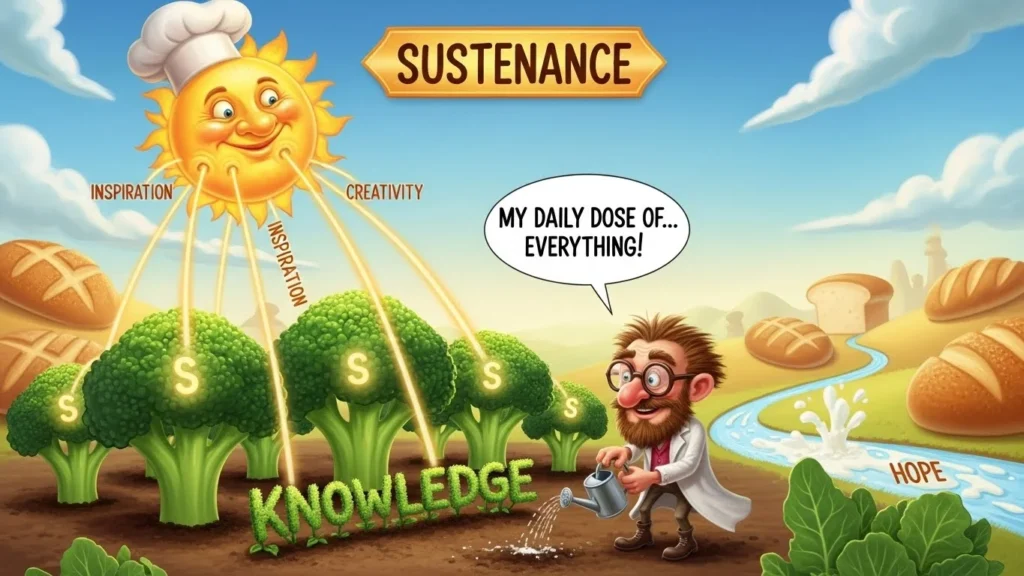

What Does “Sustenance” Mean?
Sustenance refers to something that provides nourishment, support, or strength.
Depending on context, it can mean:
Food or drink that keeps someone alive
Something that maintains life, energy, or well-being
Support or means of continuing life or activity
Simple Definition
Sustenance = food, nourishment, or something that supports life and health
It’s often used in formal or literary English, but the concept is universal.
Origin & Background of the Word “Sustenance”
The word sustenance comes from:
Latin: sustinere → “to hold up, support, or maintain”
Middle English: Adopted to mean food or means of support
Historically, sustenance was often used in literature and religious texts to emphasize life-supporting essentials, both physical and spiritual.
Sustenance in Everyday Life
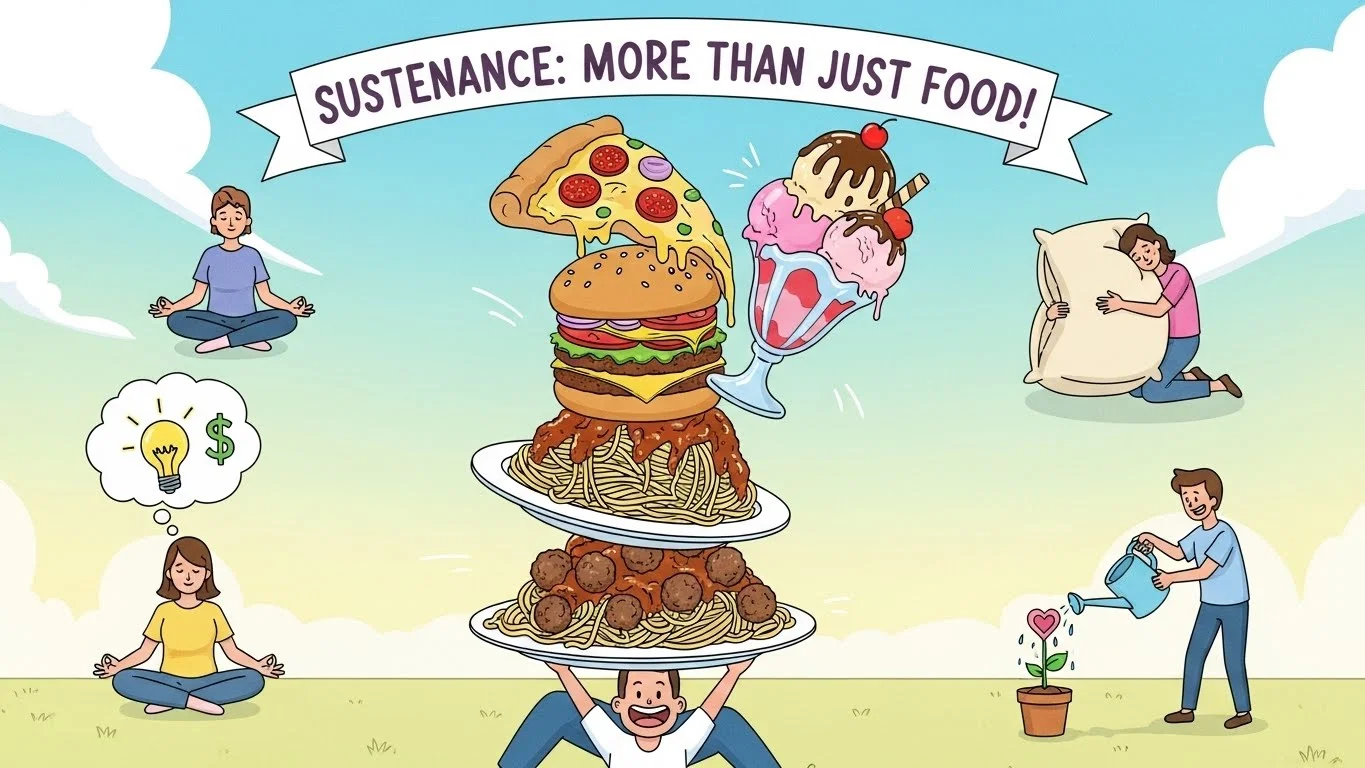
While the word may sound formal, its meaning is simple and practical: it’s anything that keeps us going physically, emotionally, or mentally.
1. Physical Sustenance
Food and drink
Vitamins and nutrients
Water and hydration
Example:
“The hikers carried enough sustenance for a week-long trek.”
Meaning: They carried food and water to survive.
2. Emotional or Mental Sustenance
Support from friends or family
Motivation or encouragement
Knowledge or wisdom
Example:
“Her love for music provided sustenance during tough times.”
Meaning: Music kept her emotionally strong.
3. Financial or Material Sustenance
Income or resources to survive
Shelter or clothing
Example:
“The grant provided sustenance for the small community project.”
Meaning: The grant offered the resources needed to continue the project.

How to Use “Sustenance” in Sentences
Here are some real-life and literary examples:
Food-related:
“Farmers grow crops for the sustenance of their families.”
Emotional support:
“Kind words from friends can be sustenance during difficult times.”
Financial/material support:
“The scholarship acted as sustenance for her studies.”
Metaphorical use:
“Hope is the sustenance that keeps people moving forward.”
Historical/literary use:
“They survived in the wilderness on whatever sustenance they could find.”
Common Misunderstandings About Sustenance
Sustenance only means food:
While often related to nourishment, sustenance can also mean emotional, mental, or financial support.Sustenance is casual English:
It’s usually formal or literary, not everyday slang.Confusing sustenance with survival:
Sustenance: The support or resources that keep life going
Survival: The act of continuing to live
Sustenance is always physical:
It can be abstract, like emotional encouragement or knowledge.
Sustenance vs Similar Words
| Word | Difference from Sustenance |
|---|---|
| Nutrition | Focused on food and nutrients only |
| Support | More general, can be emotional, financial, or physical |
| Provision | Often refers to supplies, not necessarily nourishing |
| Food | Narrow meaning, physical only |
| Aid | Assistance in general, not always life-supporting |
Why Understanding Sustenance Matters
Knowing the sustenance meaning helps you:
Read literature, articles, and religious texts correctly
Use the word accurately in professional and formal writing
Understand discussions about survival, nutrition, and support
Appreciate both literal and metaphorical uses of the word
It’s a versatile word that conveys life, nourishment, and ongoing support, making it powerful in communication.