


What Does “Netiquette” Mean?
Netiquette is a combination of two words: “net” (internet) and “etiquette” (polite behavior).
Simple definition:
Netiquette means the rules of polite, respectful, and responsible behavior when communicating online.
It covers how you:
Talk to people on the internet
Share content
Respond to messages
Disagree respectfully
Behave in digital communities
Netiquette isn’t a strict law—it’s a social guideline that helps keep online spaces respectful and useful.
Netiquette Meaning in Modern Internet Use
In today’s digital world, netiquette applies everywhere, including:
Social media platforms
Emails and work chats
Online classrooms
Forums and comment sections
Gaming communities
Video meetings
In 2026, where tone is often misunderstood online, netiquette helps prevent conflict, confusion, and unnecessary drama.
Why Netiquette Is Important
Understanding netiquette meaning isn’t just about being “nice”—it has real benefits.
Why netiquette matters:
Prevents misunderstandings
Builds a positive online reputation
Encourages respectful discussions
Reduces cyberbullying
Improves professional communication
People who follow netiquette are often seen as:
More mature
More trustworthy
Easier to work with
Common Rules of Netiquette (Easy to Remember)
Here are widely accepted netiquette principles that still apply in 2026:
Be respectful – Treat others like real people, not usernames
Think before posting – The internet remembers
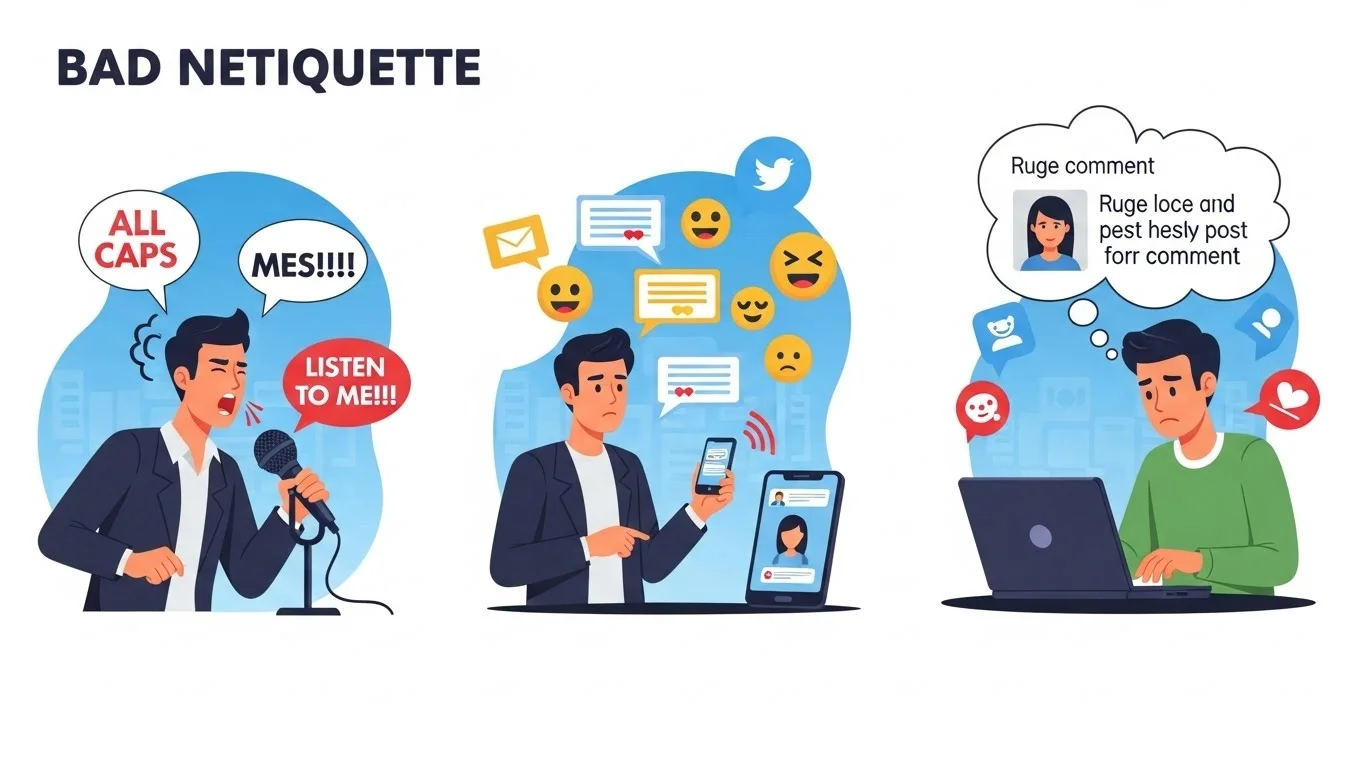
Avoid ALL CAPS – It looks like shouting
Respect privacy – Don’t share personal info without permission
Stay on topic – Especially in forums or group chats
Disagree politely – Attack ideas, not people
Don’t spam – Repeated messages annoy everyone
These simple rules apply across platforms and cultures.
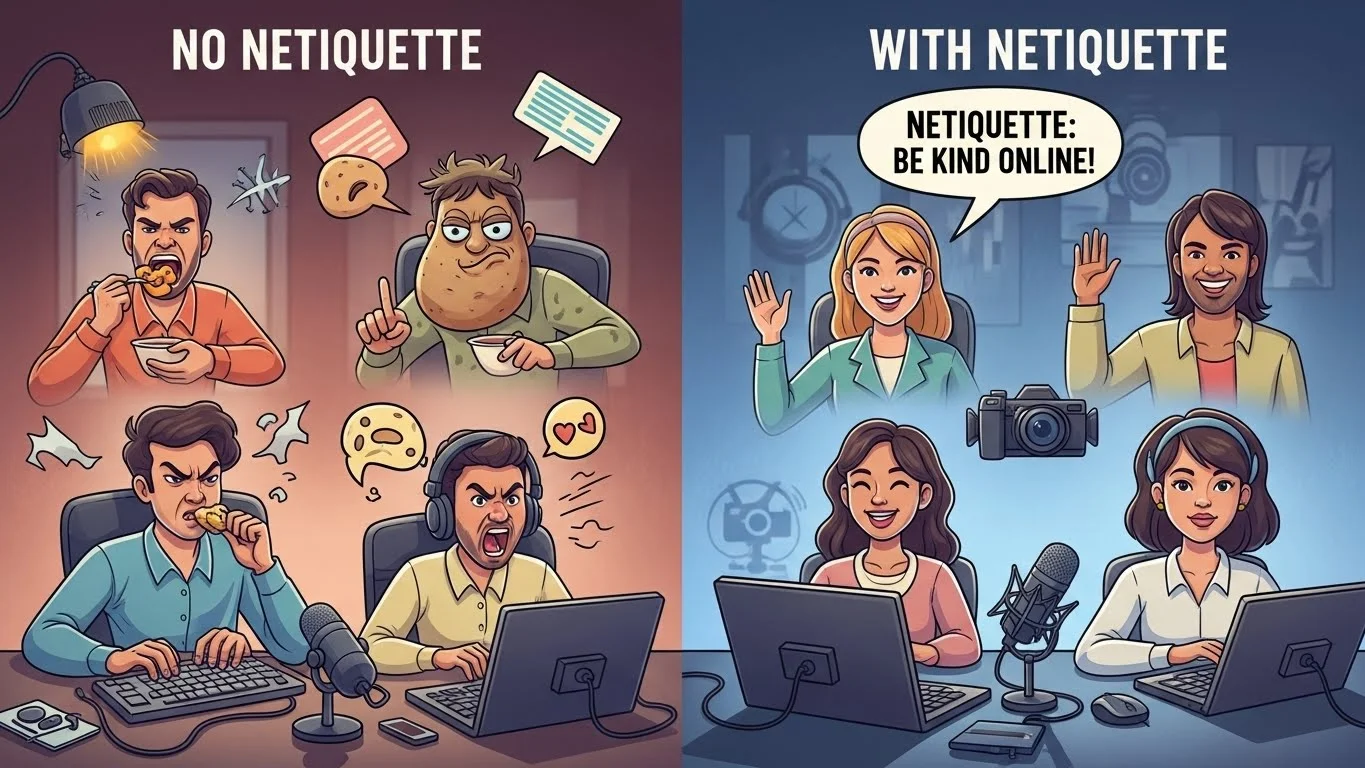
How People Practice Netiquette in Real Life
On social media:
Not trolling or insulting others
Giving constructive feedback
Avoiding unnecessary arguments
In emails:
Using polite greetings
Clear subject lines
Professional tone
In group chats:
Not flooding messages
Respecting time zones
Keeping conversations relevant
In online classes or meetings:
Muting microphones when not speaking
Respecting others’ opinions
Participating thoughtfully
All of these are examples of netiquette in action.
Real-Life Examples of Netiquette (With Explanations)
Waiting your turn to speak in a video call
Shows respect and professionalism.Correcting someone politely instead of mocking them
Encourages healthy discussion.Not sharing screenshots of private chats
Respects privacy and trust.Using clear language instead of sarcasm
Prevents tone misunderstandings.Apologizing if you post incorrect information
Builds credibility and trust.
Common Mistakes & Misunderstandings
Many people ignore netiquette without realizing it.
Thinking online behavior doesn’t matter
It affects reputation and relationships.Using sarcasm without context
Tone is hard to read online.Oversharing personal details
Can lead to privacy issues.Assuming everyone thinks the same way
Online spaces are diverse.
Understanding netiquette helps avoid these problems.
Netiquette vs Etiquette: What’s the Difference?
Etiquette: Polite behavior in real-life situations
Netiquette: Polite behavior in online environments
The core idea is the same—respect—but netiquette focuses on digital communication, where tone and intent can easily be misread.
Related Terms You Might See
If you’re learning about netiquette, you’ll often see these related terms:
Digital citizenship – Responsible online behavior
Online conduct – How people act on the internet
Cyber ethics – Moral behavior in digital spaces
Internet manners – Casual term for netiquette
These concepts all work together to create healthier online communities.
Netiquette in 2026: Why It Matters More Than Ever
With AI tools, remote work, and global communication becoming normal, netiquette is no longer optional. In 2026, how you behave online can affect:
Job opportunities
Personal relationships
Online credibility
Community trust
Following netiquette helps you stand out in a positive way.