
What Does “Naseeb” Mean?
Clear Definition
Naseeb (noun):
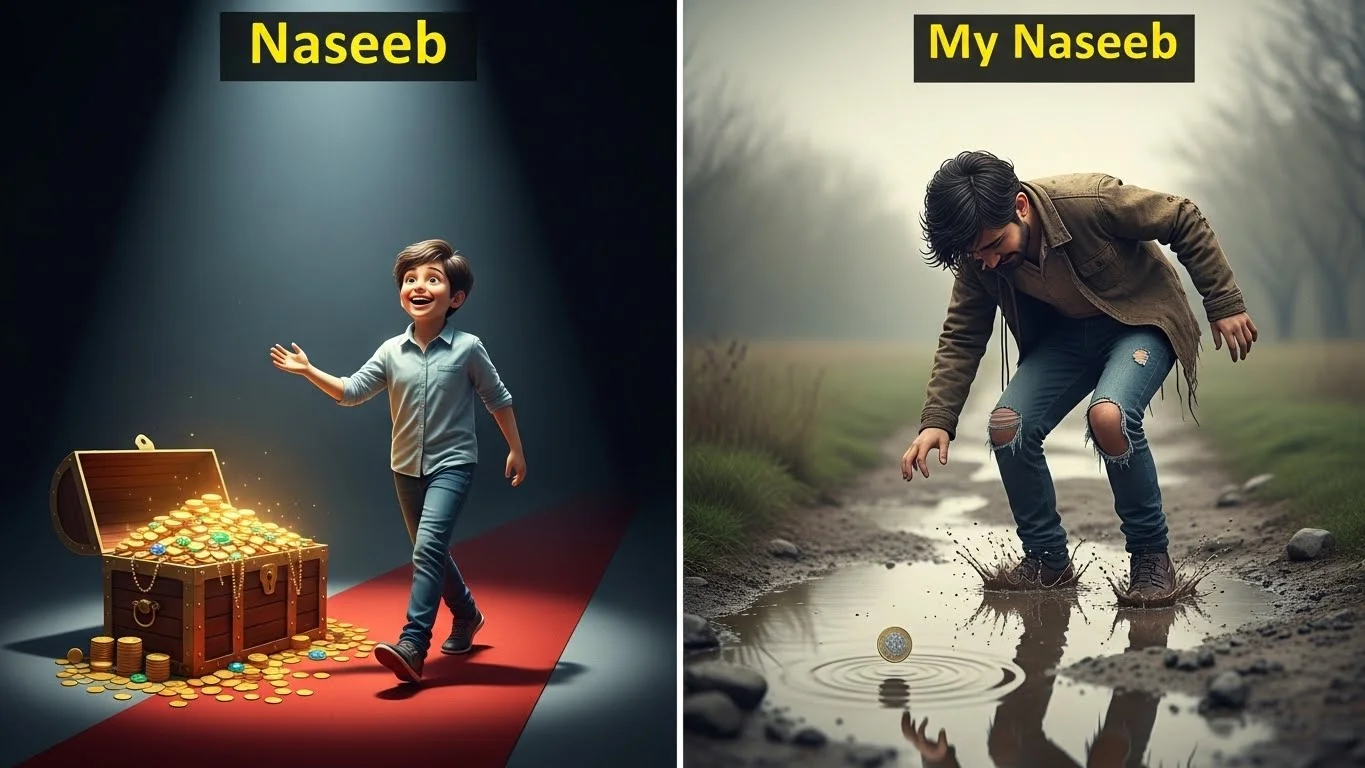
Refers to one’s fate, destiny, or life’s share, what is preordained or destined for a person.
Can indicate good fortune, misfortune, or the inevitable events of life.
Used in both everyday conversation and literature/poetry.
Naseeb (in conversation):
Often used to express acceptance of life events, e.g., “It wasn’t in my naseeb.”
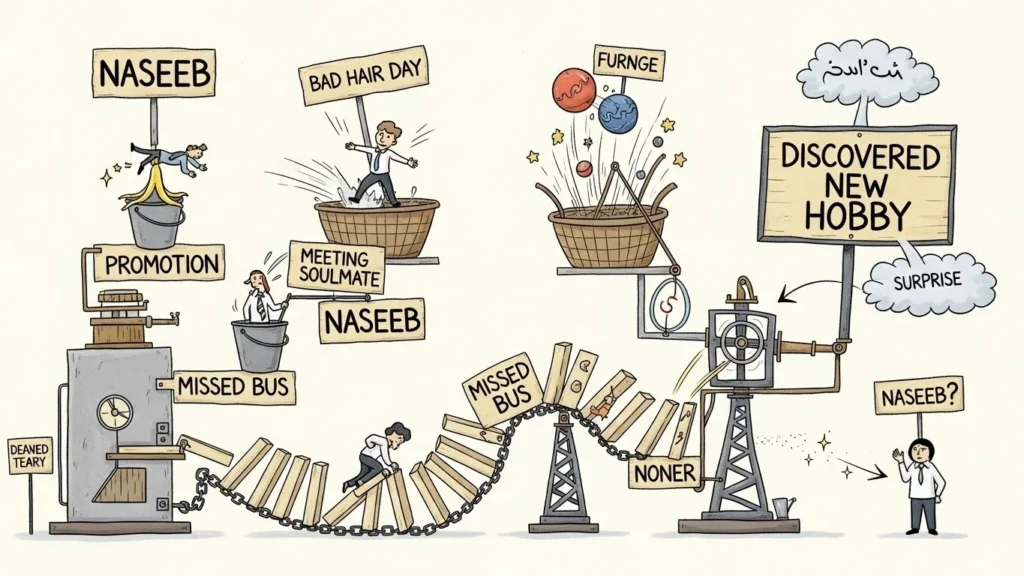
Suggests a belief that life unfolds according to a larger plan beyond personal control.
Contextual Uses
Cultural: In South Asian cultures, naseeb is tied to ideas of karma, divine will, and life’s path.
Casual: Expressing disappointment or acceptance in daily events.
Literary: Explored in poetry, novels, and songs as a theme of fate, love, or loss.
Social Media: Often referenced philosophically or humorously in captions and posts.
Origin and Cultural Significance
Language Origin: Arabic origin, “naseeb” (نصيب) meaning “share” or “portion.”
Cultural Adoption: Popular in Urdu, Hindi, Punjabi, and other South Asian languages.
Philosophical Significance: Belief that life’s outcomes are partially or wholly preordained.
Literary & Media Significance: Used extensively in poetry, novels, films, and songs to depict love, loss, success, or life’s twists.
Historical Note:
In classical Urdu and Persian poetry, naseeb often reflects divine providence, emphasizing acceptance of what life delivers.
Famous poets like Mirza Ghalib and Allama Iqbal often wrote about the interplay of naseeb and human effort.

How People Use “Naseeb” in Real Life
Everyday Life Example
“I missed my flight; maybe it wasn’t in my naseeb.”
Explanation: Acceptance of an event as beyond one’s control.
Love & Relationships Example
“Meeting you was in my naseeb.”
Explanation: Suggests destiny or fate brought two people together.
Social Media Example
“Some days we win, some days we learn—it’s all naseeb.”
Explanation: Philosophical or motivational reflection on life.
Literature & Poetry Example
“The hero’s naseeb guided him through struggles to ultimate success.”
Explanation: Used metaphorically to explore destiny and life’s journey.
Cultural Example
“Good deeds bring blessings and improve your naseeb.”
Explanation: Reflects belief in karma influencing destiny.
Real-Life Examples of Naseeb Usage
Daily Life:
“I couldn’t get the scholarship; perhaps it wasn’t in my naseeb.”
Acceptance of life’s circumstances.
Romantic Context:
“It was my naseeb to meet her at the right time.”
Expressing destiny in love.
Poetic Context:
“Naseeb wrote his story in stars before he was born.”
Literary depiction of fate’s inevitability.
Cultural Wisdom:
“Helping others brings good naseeb and blessings.”
Integrates philosophy and moral values.
Motivational Use:
Social media caption: “Naseeb guides the journey, but effort drives the path.”
Combines destiny with personal effort.
Common Mistakes & Misunderstandings
Thinking Naseeb is Just Luck:
Naseeb is broader than luck; it encompasses fate, life path, and destiny, not just chance events.
Using Naseeb Only for Bad Events:
Naseeb can refer to good or bad events, both are seen as part of one’s share in life.
Confusing Effort With Naseeb:
Effort affects outcomes, but naseeb represents what is ultimately meant to happen.
Mispronunciation:
Correct pronunciation: nah-seeb
Assuming Naseeb is Fixed:
Cultural beliefs differ; some hold that naseeb can be influenced by actions, prayers, and morality, while others see it as fully predetermined.

Related Terms & Expressions
Qismat: Fate or destiny, often used interchangeably with naseeb.
Kismet: Persian/Urdu origin, meaning fate or fortune.
Fortune: English equivalent emphasizing luck or destiny.
Destiny: Path or outcome believed to be predetermined.
Divine Will: The idea that higher powers shape one’s life events.
Luck: Random chance, sometimes overlapping with the idea of naseeb.