
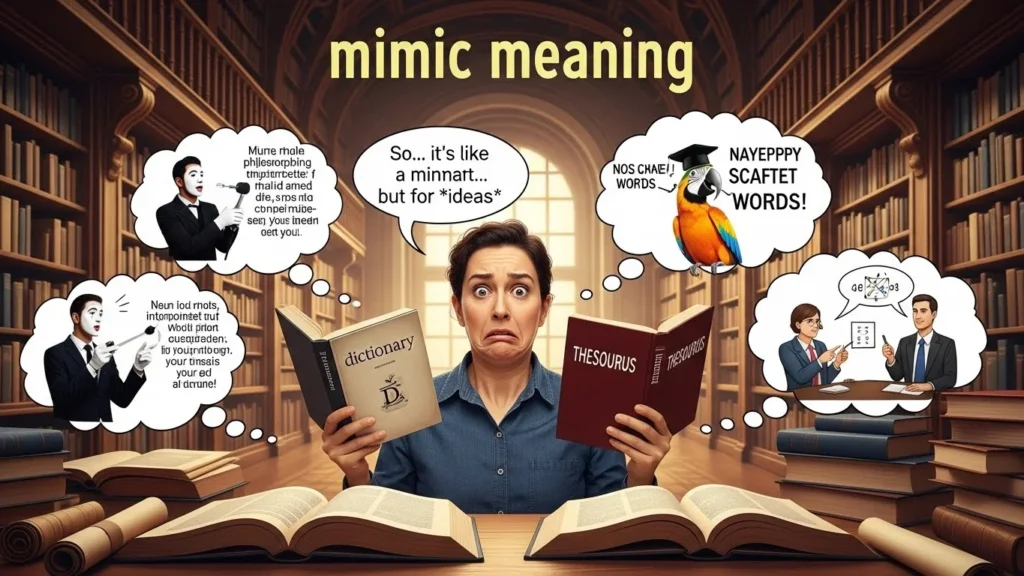

What Does “Mimic” Mean?
Mimic means to imitate or copy someone or something, often to entertain, ridicule, or learn.
It can also refer to things in nature that resemble something else for survival.
In simple words:
Mimic = to copy, imitate, or resemble.
Mimic Meaning in Simple Terms
When you copy someone’s actions, voice, or gestures → mimic
When an animal or object resembles another to avoid danger → mimic
Example:
“The comedian mimicked the president’s voice perfectly.”
→ He copied the voice for humor.
Origin of the Word Mimic
Comes from the Greek word mimos, meaning imitator or actor
Historically referred to performers who imitated others for entertainment
Over time, the meaning expanded to biology and general imitation
Different Meanings of Mimic Based on Context
1. Mimic as a Verb (Copying Behavior)
Most common usage in everyday life.
Examples:
“Children often mimic their parents’ behavior.”
“He mimicked her laugh to tease her.”
Meaning:
Imitate or copy someone’s actions, speech, or expression
2. Mimic as a Noun (The Person or Thing Imitating)
Example:
“The parrot is a skilled mimic.”
“She is a great mimic of famous actors.”
Meaning:
Someone or something that imitates others
3. Mimic in Biology or Nature
Some species mimic others for survival.
Examples:
Stick insects mimic twigs to hide from predators
Some butterflies mimic poisonous species to avoid being eaten
Meaning:
Resembling another species for protection or advantage
4. Mimic in Technology
In AI, robotics, or software:
Robots or software can mimic human behavior
Example: “The AI mimics human conversation.”
This usage highlights imitation for learning or simulation.
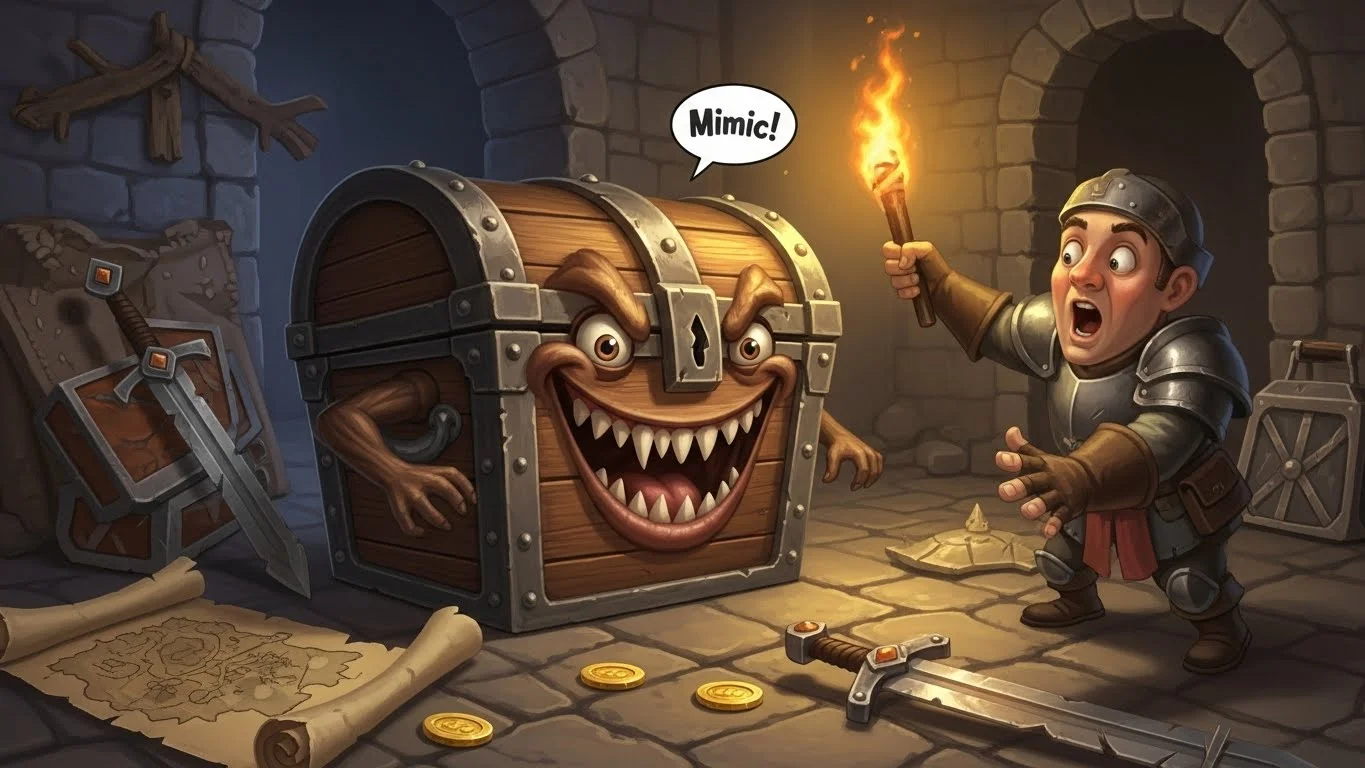
How People Use “Mimic” in Real Conversations
Casual Talk
“Stop mimicking me!” → playful or teasing
“Kids mimic everything their teachers do.” → observational
Humor
“He mimicked the comedian so well, everyone laughed.”
Science or Nature
“This species mimics leaves to hide from predators.”
Technology & AI
“Voice assistants mimic natural speech patterns.”
Real-Life Examples of Mimic
Everyday Life: “She mimicked my accent just for fun.”
Animals: “The moth mimics a wasp’s appearance.”
AI & Tech: “This chatbot mimics human responses realistically.”
Entertainment: “The actor is a mimic who copies famous celebrities.”
Mimic vs Copy vs Imitate
Mimic: Usually playful, humorous, or for study
Copy: Exact replication, often neutral
Imitate: Broader, can be serious, respectful, or casual
Example:
Mimic: Teen mimics celebrity gestures
Copy: Student copies homework
Imitate: Young artist imitates a famous painting style
Common Misunderstandings About Mimic
Mimic always means mocking
False. It can be playful, educational, or protective (in animals).Mimic is only human behavior
False. Animals, plants, and AI can mimic too.Mimicking is negative
Not always. It can help learning or entertain.
Why Mimic Matters in 2026
Social media trends involve mimicking styles, dances, or speech
AI and robotics increasingly mimic human behavior
Understanding mimicry helps in communication, humor, and education
Related Words & Concepts
Imitation – Copying behavior or style
Parody – Imitation for humor
Camouflage – Animal mimicry for hiding
Replication – Exact copying
Simulation – Mimicking systems or processes