
What Does “King Cake” Mean?
At its core, a king cake is a sweet, colorful pastry associated with Mardi Gras and other Carnival celebrations.
Clear Definition
King Cake (noun):
A circular or oval-shaped cake, often decorated with purple, green, and gold sugar.
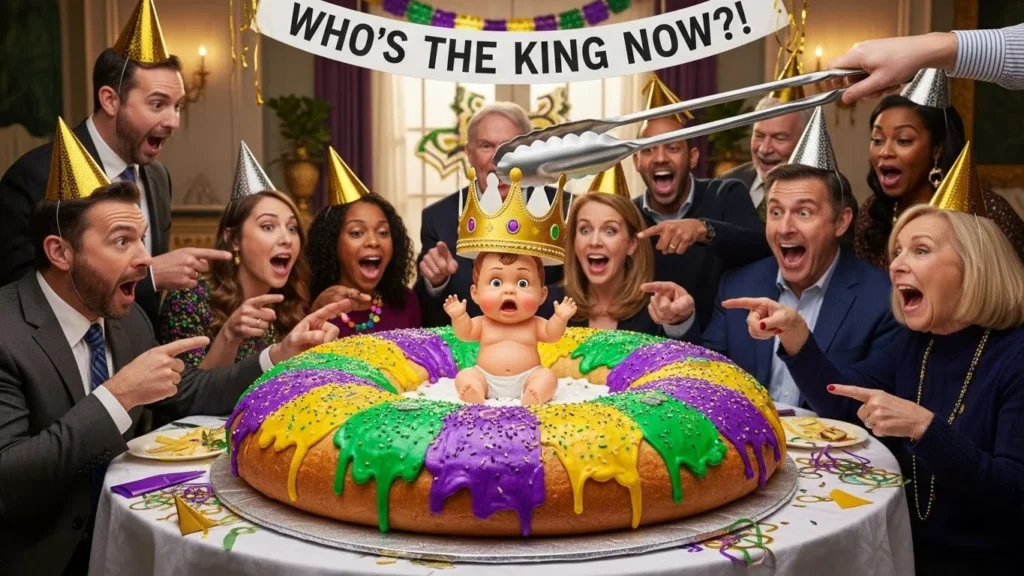
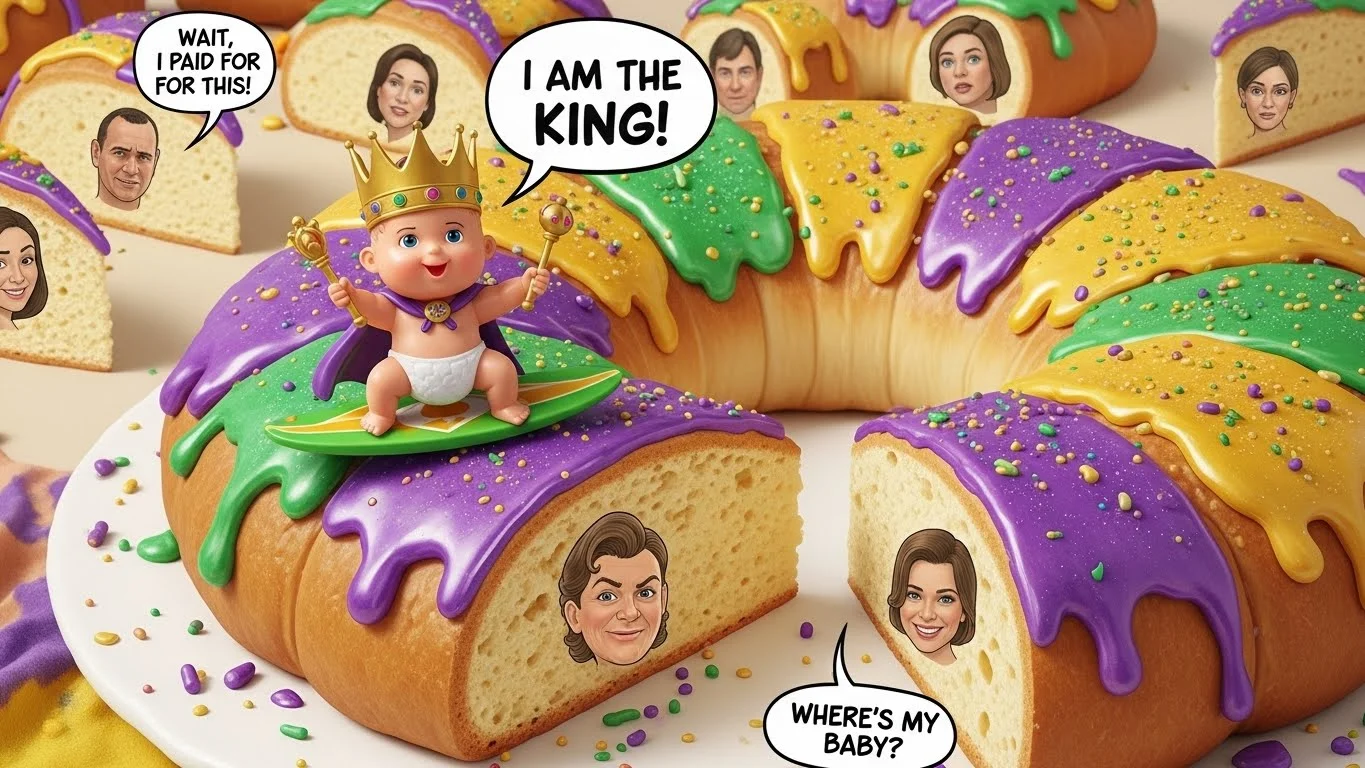
Traditionally includes a small hidden figurine or bean inside the cake.
Associated with festivals, celebrations, and cultural traditions.
Meaning Based on Context
Food: Refers to the actual cake itself.
Tradition: Symbolizes celebration, community, and the Christian holiday of Epiphany.
Social: Eating or sharing king cake often comes with games or rituals, like who finds the hidden figurine.
Origin and History of King Cake
The king cake tradition originated in Europe and later became popular in the United States, especially in Louisiana and New Orleans.
Dates back to 13th century France for Epiphany (celebrating the visit of the Three Kings).
The hidden figurine represents the baby Jesus.
In the U.S., the cake became part of Mardi Gras celebrations, often topped with colorful sugar:
Purple = justice
Green = faith
Gold = power
Today, king cake is enjoyed from Epiphany (January 6) through Fat Tuesday (Mardi Gras day).
How People Use King Cake in Real Life
Common Situations
Mardi Gras or Carnival celebrations
Family or community parties
Social media posts featuring festive foods
Fundraisers and office parties
Examples of Usage
“We ordered a king cake for Fat Tuesday.”
“She found the baby in the king cake and has to host next year’s party.”
“King cake season is my favorite time of year!”
How King Cake Traditions Work
Ingredients & Decoration
Cake base: Usually sweet dough, sometimes braided
Filling (optional): Cream cheese, cinnamon, fruit, or praline
Toppings: Colored sugar in purple, green, and gold
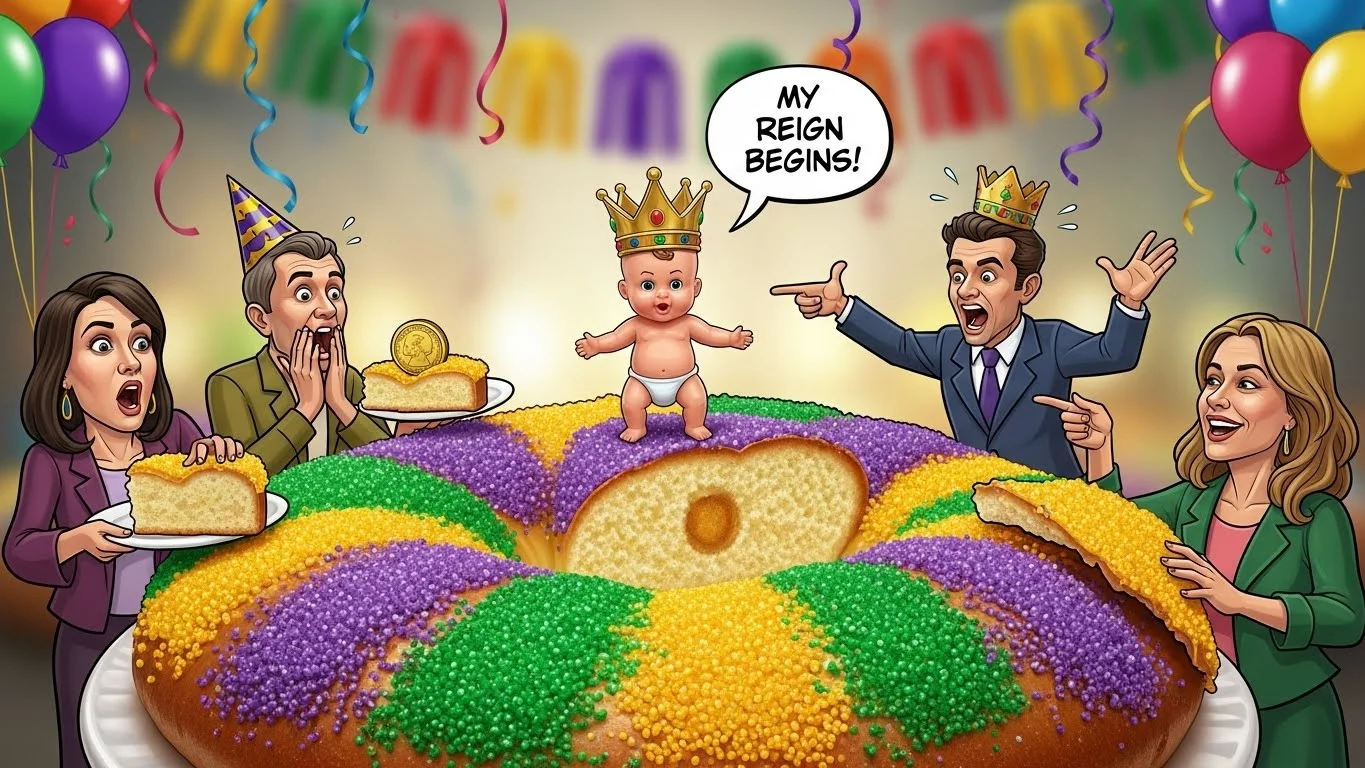
Hidden item: Small plastic baby or bean
Tradition & Fun
The person who finds the hidden figurine is said to have good luck or host the next party.
Eating king cake is symbolic of community and celebration.
Real-Life Examples of King Cake Usage
Example 1: Family Celebration
“We shared a king cake after dinner, and my cousin found the baby!”
Explanation: The cake was enjoyed, and someone discovered the hidden figurine, following tradition.
Example 2: Social Media Post
“Nothing says Mardi Gras like a colorful king cake!”
Explanation: Highlighting king cake as a festive, visually appealing dessert.
Example 3: Office Party
“The office ordered a king cake, and the winner has to bring snacks next week.”
Explanation: Modern adaptation of the tradition, adding fun and engagement.
Example 4: Cultural Highlight
“King cake connects Louisiana’s French heritage with modern Mardi Gras celebrations.”
Explanation: Shows cultural significance beyond just food.
Common Mistakes & Misunderstandings
Mistake 1: Thinking King Cake Is Only for Kids
While family-friendly, king cake is enjoyed by all ages during Mardi Gras.
Mistake 2: Confusing King Cake With Regular Cake
It’s specific in shape, color, and tradition, not just any sweet cake.
Mistake 3: Ignoring the Hidden Figurine Tradition
The fun tradition of hiding a figurine is central to the cultural experience.
Mistake 4: Thinking King Cake Is Only Louisiana
It originated in Europe but is now a symbol of New Orleans Mardi Gras, though variations exist worldwide.
Related Terms & Cultural Concepts
Mardi Gras: Carnival celebration before Lent
Epiphany: Christian holiday on January 6, “Three Kings’ Day”
Fat Tuesday: Last day of Mardi Gras, before Ash Wednesday
Paczki: Polish pastry enjoyed before Lent, similar festival tradition
Carnival: Seasonal festival celebrated globally with sweets and parades