
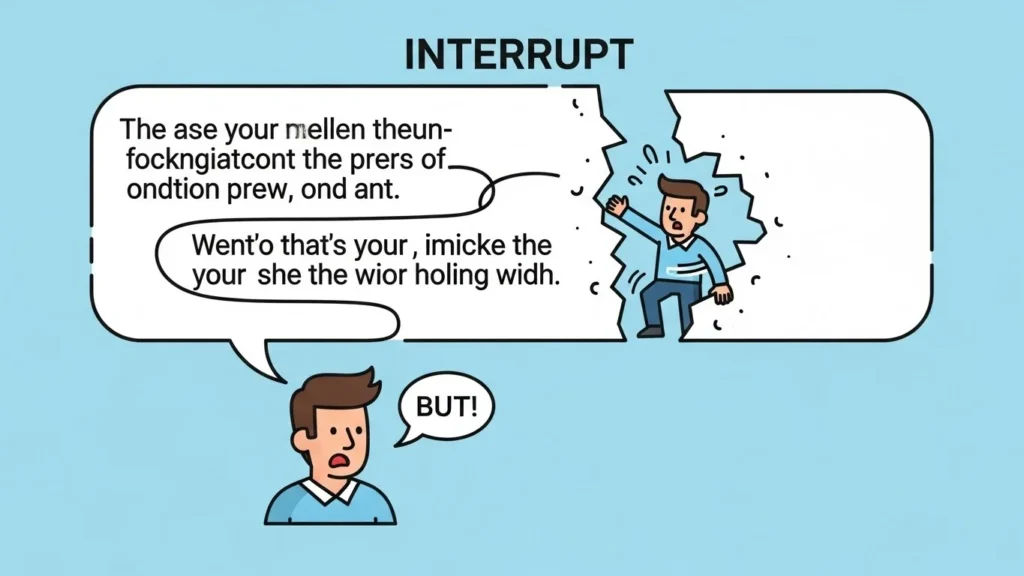

What Does “Interrupt” Mean?
Interrupt is a verb that describes stopping someone from speaking, acting, or continuing what they are doing, usually temporarily.
Simple definition:
Interrupt = to break the flow of something (speech, action, or process).
Core aspects of interruption:
Can be verbal (cutting someone off in conversation)
Can be physical or procedural (stopping an action, event, or process)
Often unintentional, but can be deliberate
Etymology:
From Latin interrumpere, meaning “to break apart” or “to break in between.”
Interrupt Meaning in Everyday Life
1. In Conversation
Interrupting is most common in discussions, meetings, or casual chats.
Examples:
Verbal: “Sorry to interrupt, but I have a question.”
Casual chat: Typing over someone in group text chat
Professional context: Asking a clarifying question during a presentation
2. In Texting and Online Chat
Interruptions can occur when multiple people type simultaneously in group chats.
Using “sorry to interrupt” is a polite way to add your point without being rude.
Example:
“Interrupting real quick, but did you see the new update?”
3. In Actions or Processes
Interrupt can also refer to stopping an ongoing action or process.
Examples:
A software program may interrupt a task to ask for input.
A fire alarm can interrupt your sleep.
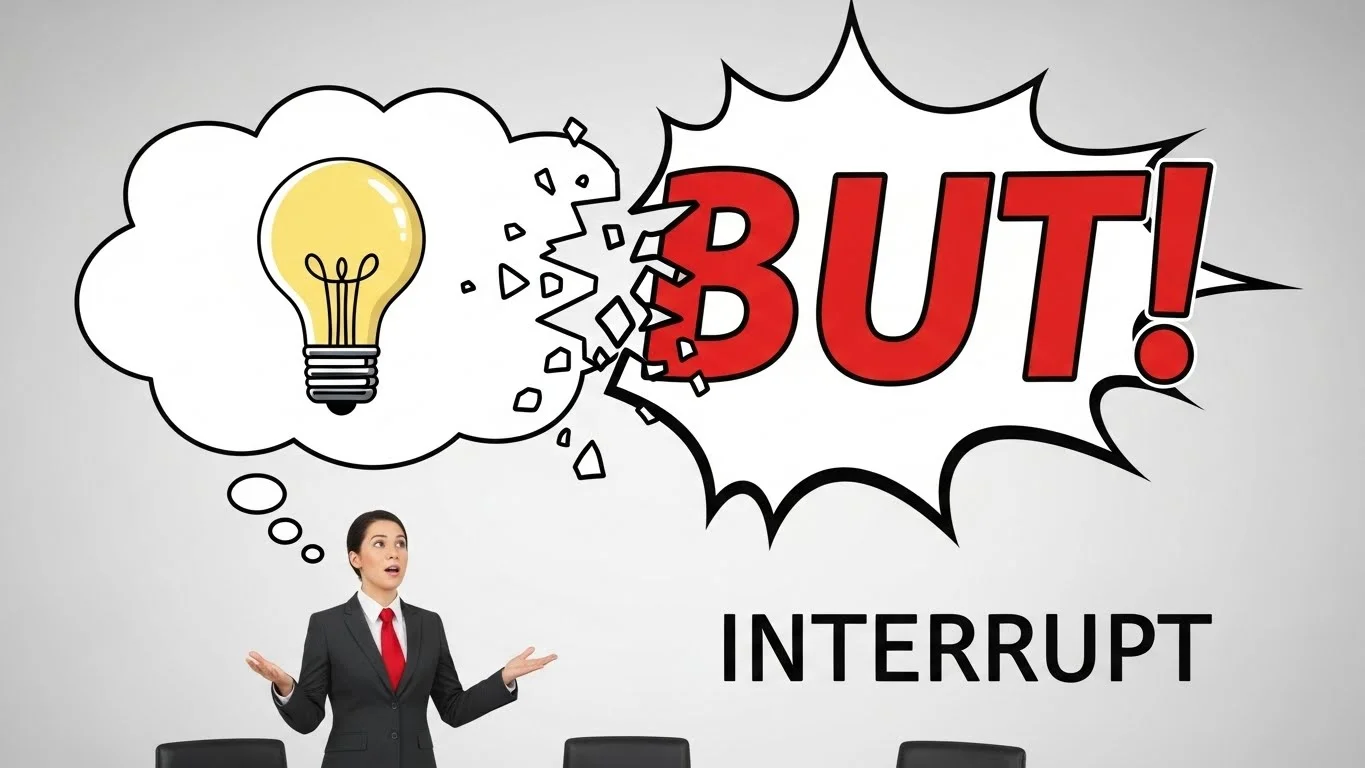
Real-Life Examples of “Interrupt”
“Please don’t interrupt me while I’m speaking.”
Meaning: Don’t break my flow of speech.“The phone call interrupted our meeting.”
Meaning: Stopped or broke the meeting temporarily.“Interrupting your scroll to share some news!”
Meaning: Used playfully in texts or social media posts.“The construction outside interrupted my work.”
Meaning: Disturbed the activity or focus.“He tends to interrupt others when excited.”
Meaning: Cuts in while others are talking, often unintentionally.
Common Mistakes & Misunderstandings
Confusing interrupt with intrude: Interrupt is temporary breaking; intrude implies entering where you shouldn’t.
Using interrupt casually in formal speech: Always polite phrasing like “may I interrupt?” is better.
Thinking interrupt is always negative: Interruptions can be helpful (e.g., for urgent clarification).
Overusing it in text: It may sound formal or stiff in casual chats.
Related Words and Expressions
Understanding interrupt also involves these terms:
Cut off – similar, often rude interruption
Break in – literally or figuratively entering a conversation or process
Interject – politely adding something into a discussion
Disrupt – broader interruption of a process or flow
Pause – temporary stop without breaking continuity
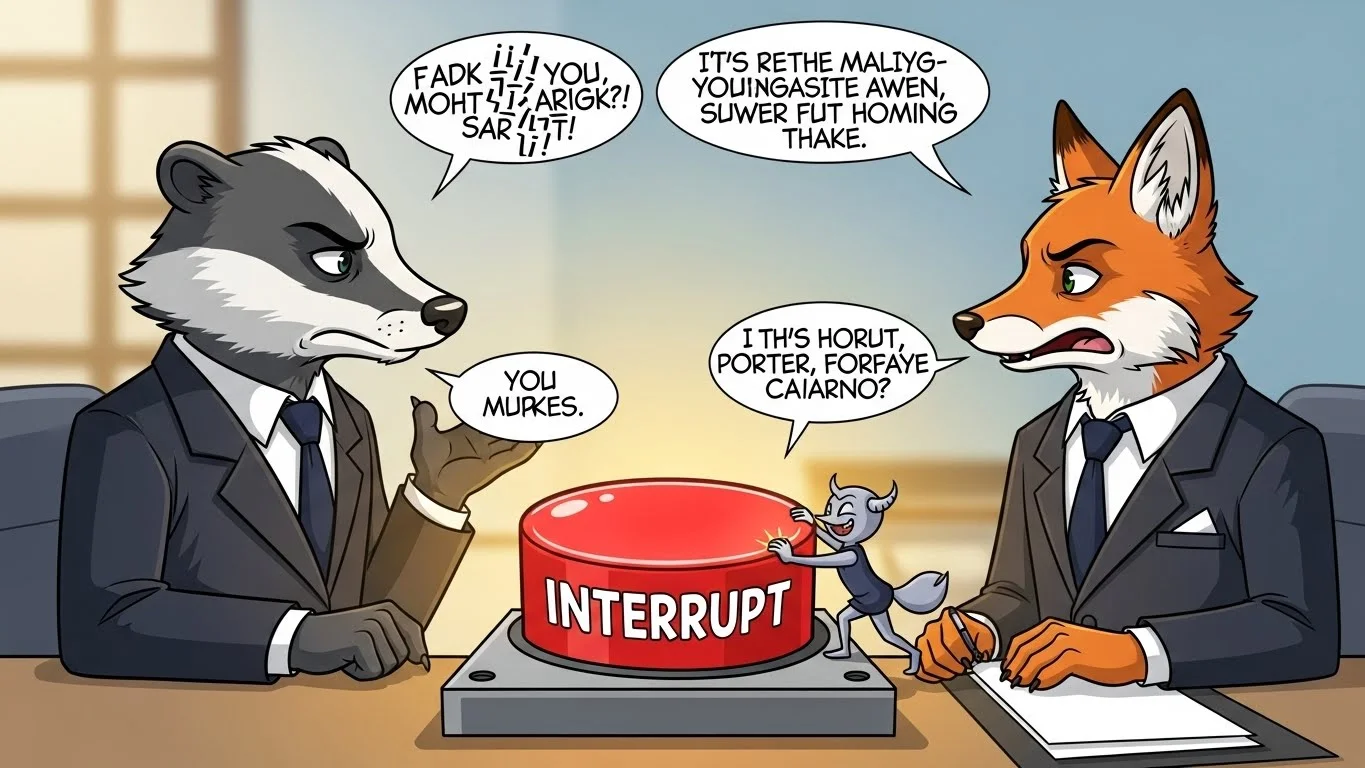
Interrupt in Modern Chat and Digital Culture (2026)
By 2026, interrupt has expanded beyond spoken conversation:
In Zoom calls, Slack, or Discord, interrupting digitally can mean sending a message while someone is typing or speaking.
Notifications, pop-ups, and alerts are often described as interruptions.
Social media humor uses phrases like: “Interrupting your scroll…” to grab attention playfully.
Politeness and timing remain key in digital interruptions.