
What Does “ETFs” Mean?
ETFs stands for Exchange-Traded Funds.
In simple words:
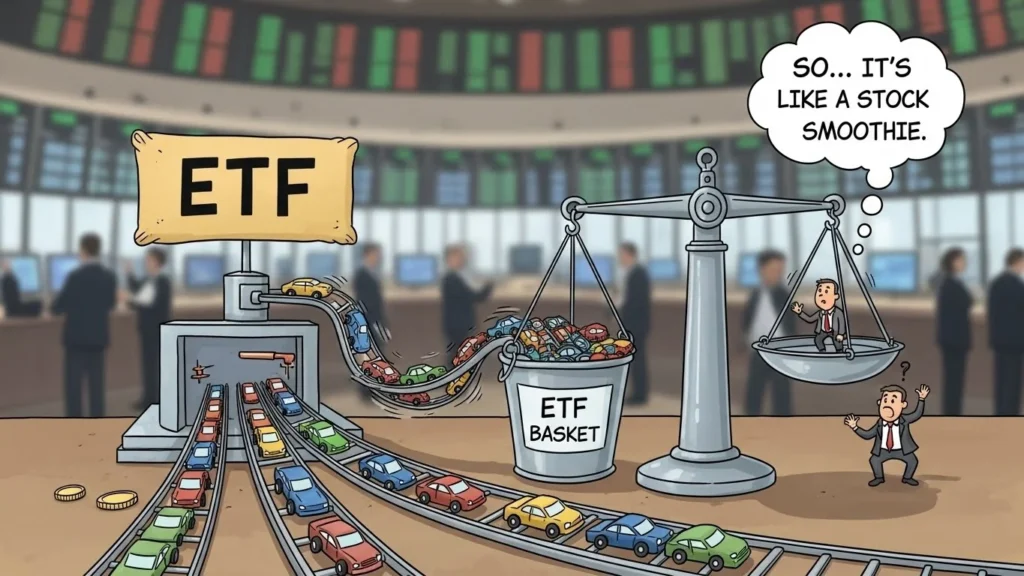
A fund that holds a collection of assets, like stocks, bonds, or commodities
Traded on stock exchanges just like individual stocks
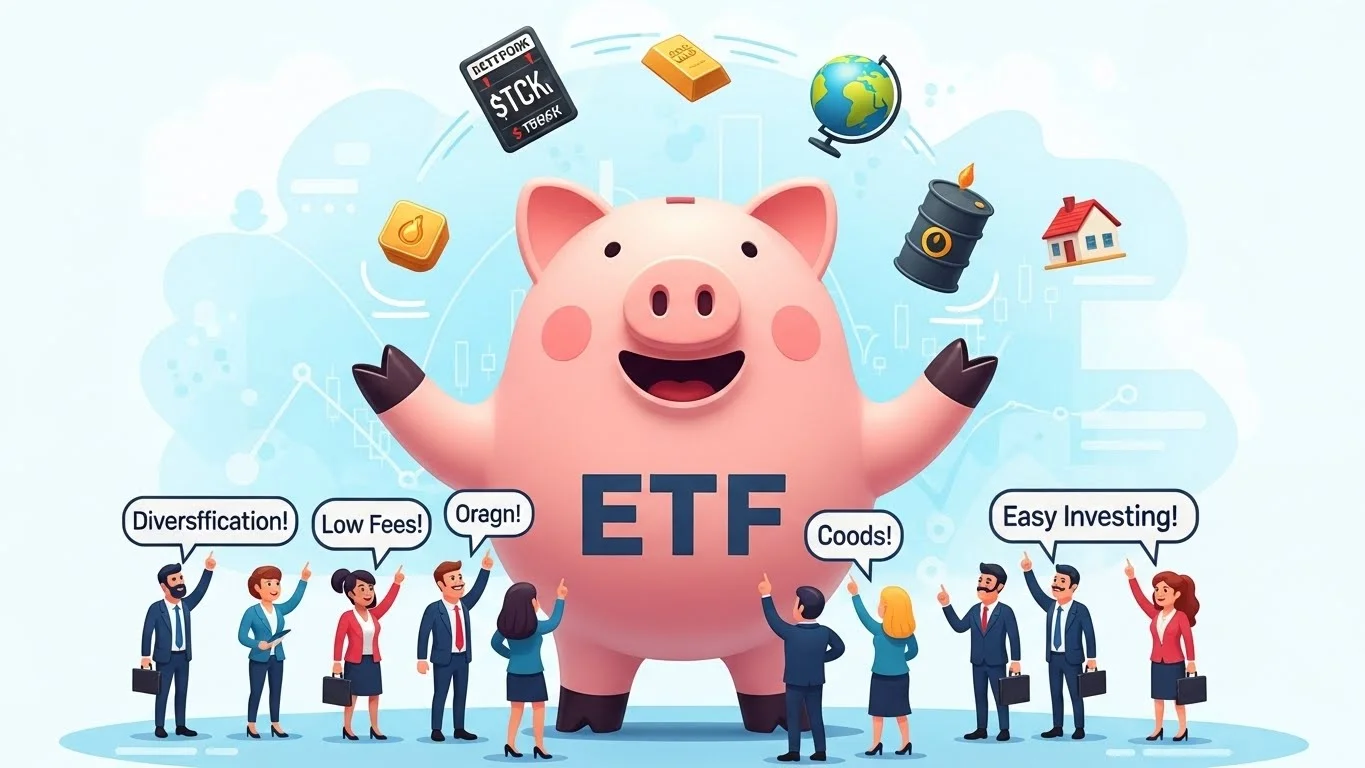
Offers diversification and flexibility
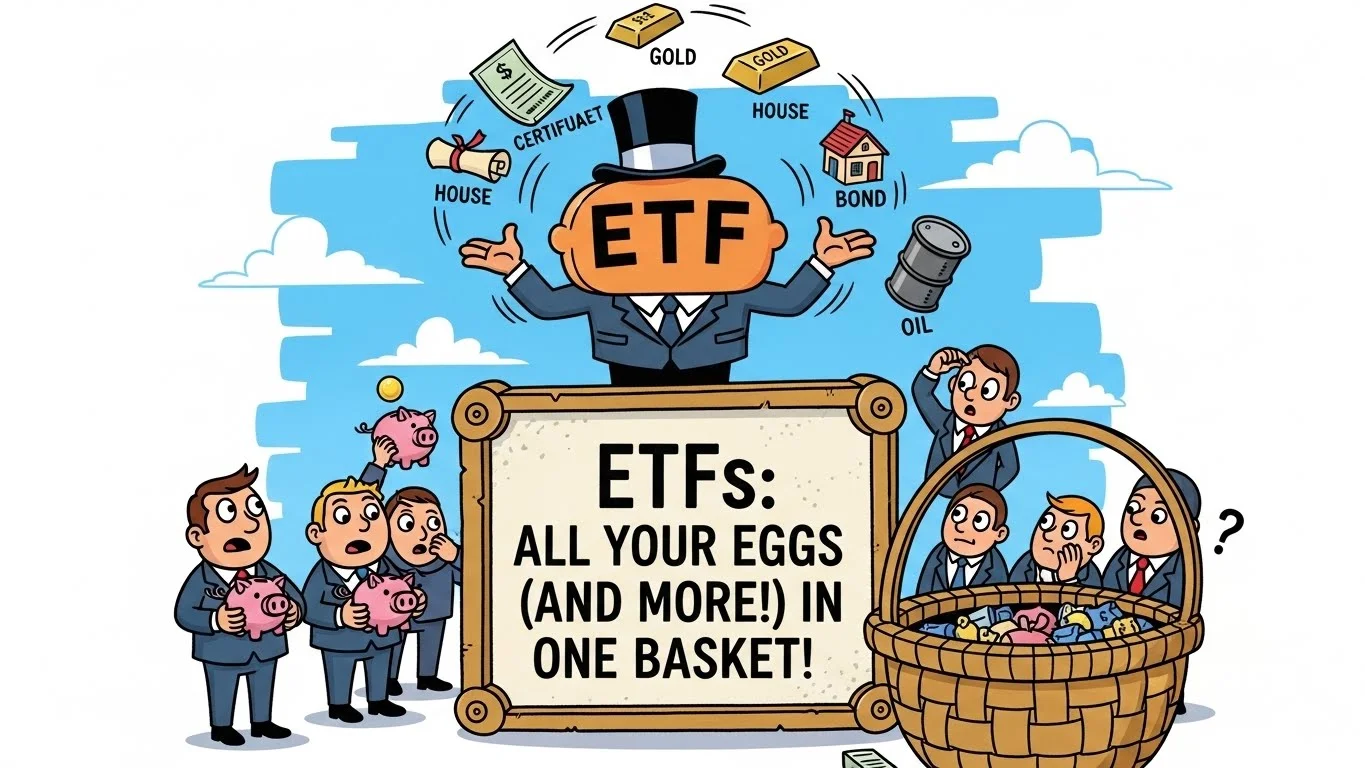
ETFs = baskets of investments you can buy or sell on the stock market
Example:
“I invested in an S&P 500 ETF to track the US stock market.”
Explanation: Buying the ETF gives exposure to 500 large companies at once.
How ETFs Work
1. Basket of Assets
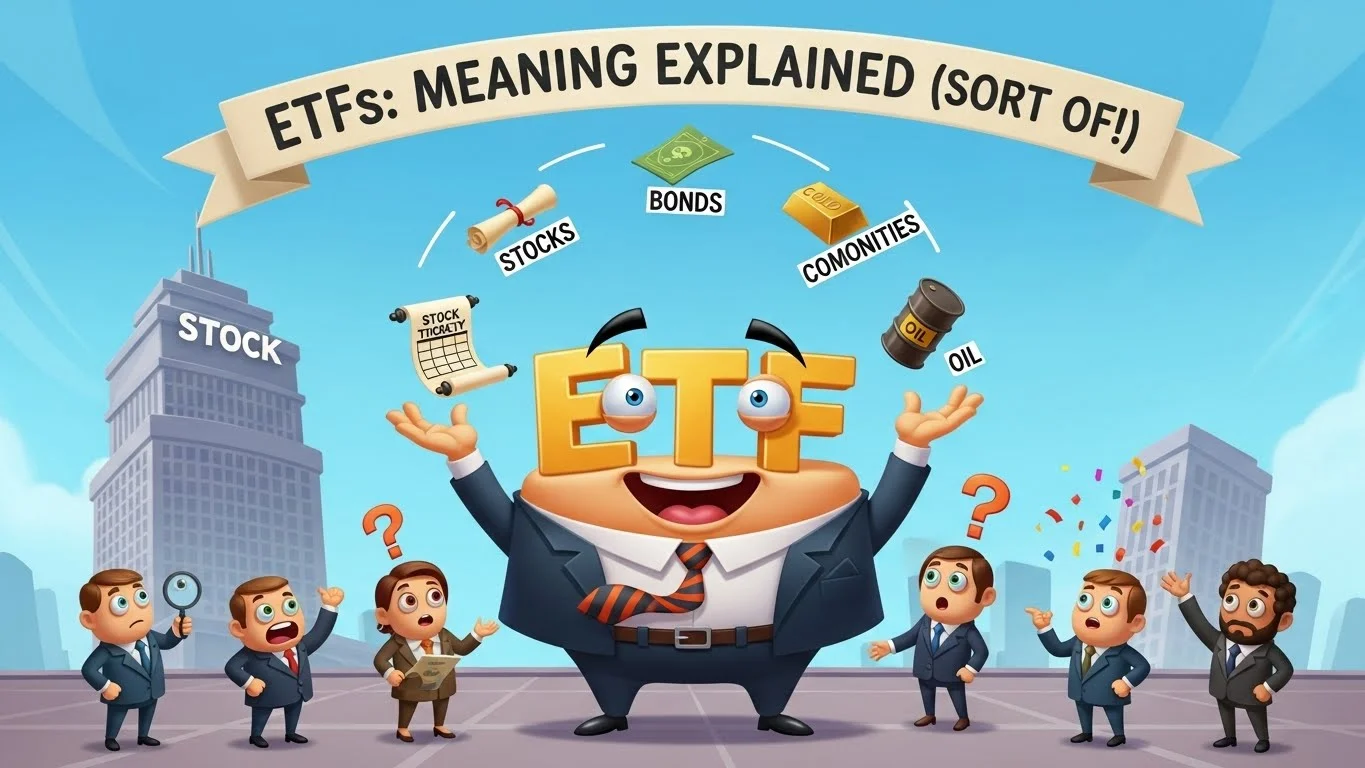
An ETF contains a group of securities, such as:
Stocks
Bonds
Commodities
Foreign currencies
Investors don’t buy the individual assets—they buy shares of the ETF, which represent a portion of the fund.
2. Traded Like a Stock
ETFs can be bought and sold anytime the stock market is open.
Prices change throughout the day based on market demand.
This differs from mutual funds, which are priced only once per day.
3. Types of ETFs
Stock ETFs: Track groups of stocks (e.g., S&P 500 ETF)
Bond ETFs: Track government or corporate bonds
Sector ETFs: Focus on industries like tech, healthcare, or energy
Commodity ETFs: Track gold, oil, or other commodities
International ETFs: Track foreign markets
4. Advantages of ETFs
Diversification: Spread risk across many assets
Lower costs: Often cheaper than mutual funds
Liquidity: Can trade any time the market is open
Flexibility: Buy or sell small amounts
Transparency: Holdings are usually disclosed daily
5. Risks of ETFs
Market risk: ETFs lose value if underlying assets drop
Tracking error: ETF may not perfectly match its index
Liquidity risk: Some niche ETFs are harder to trade
Sector or commodity risk: Single-sector or commodity ETFs can be volatile
Real-Life Examples of ETFs
Example 1: S&P 500 ETF
Tracks the 500 largest US companies
Gives investors exposure to the overall US stock market
Example 2: Gold ETF
Tracks gold prices without owning physical gold
Easier for investors to trade gold on stock exchanges
Example 3: Technology Sector ETF
Focuses on tech companies like Apple, Microsoft, or Tesla
Investors bet on the growth of the tech industry
Example 4: International ETF
Tracks foreign stock markets like Japan or Europe
Offers global diversification
Common Mistakes and Misunderstandings About ETFs
Mistake 1: Thinking ETFs Are Risk-Free
They are diversified but still subject to market fluctuations.
Mistake 2: Confusing ETFs with Mutual Funds
ETFs trade like stocks; mutual funds do not.
Mistake 3: Assuming All ETFs Are the Same
Different ETFs track different assets, sectors, or indices.
Mistake 4: Ignoring Fees
ETFs may have expense ratios or trading costs that reduce returns.
Related Financial Terms
Mutual Fund: Pooled investment, priced once per day
Index Fund: Tracks a market index
Stocks: Ownership in individual companies
Bonds: Loans to companies or governments
Diversification: Spreading investments to reduce risk
Internal linking ideas:
Mutual fund meaning
Stocks meaning
Bonds meaning