

What Does “Estate Sale” Mean?
An estate sale has a few related meanings depending on context:
Literal Meaning:
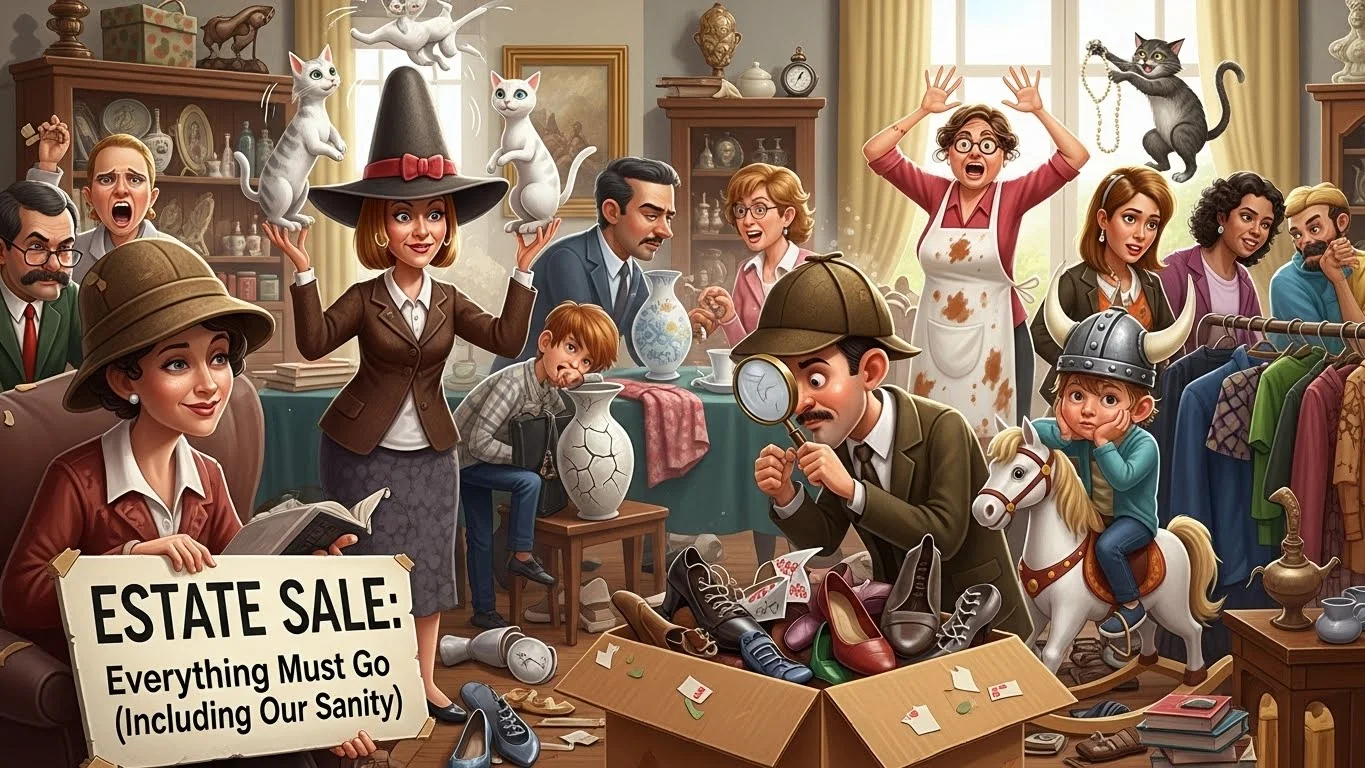
An estate sale is a sale of most or all items from a person’s home, usually because of major life events like moving, downsizing, or death. Unlike a garage sale or yard sale, estate sales often involve professional organizers who display items for sale in the home itself.Online/Chat Meaning:
In online communities, forums, or social media, people might say “estate sale” when talking about selling vintage, antique, or high-value household items. It’s sometimes used humorously to describe someone clearing out their stuff in bulk.Figurative Use:
Some use it jokingly to refer to large personal clear-outs, like when someone says, “My closet today was basically an estate sale.”
Origin Note: Estate sales have existed for decades, primarily in the U.S., as a way for heirs or homeowners to liquidate possessions. Over time, the term has migrated into online slang, especially in marketplaces and social media conversations.
How People Use “Estate Sale” in Real Conversations
Knowing where and how to use estate sale can help you communicate clearly and avoid misunderstandings.
Platforms
Texting & WhatsApp: Casual references when cleaning out or selling items.
Example: “I had an estate sale of my old clothes today—so many things gone!”
Facebook Marketplace & Craigslist: Literal use to advertise a sale.
Reddit & Forums: Often used to discuss tips for attending or buying from estate sales.
Instagram & TikTok: Sometimes used humorously in captions when showing a massive personal cleanup or haul.
Appropriate Use
Discussing household sales or auctions.
Highlighting a large personal clearance event.
Sharing tips for shopping vintage or antique items.
Awkward or Risky Use
Using it to describe casual or small sales—makes it sound exaggerated.
Overusing in memes without context may confuse people unfamiliar with the term.
Pro Tip: Match the meaning to the context—literal for sales, figurative for jokes or massive cleanouts.

Real-Life Examples of “Estate Sale” in Text Messages
Here are some relatable examples of estate sale usage:
Example 1 – Literal Sale Announcement:
Text: “Estate sale this weekend—furniture, dishes, vintage books, everything must go!”
Meaning: A professional-style sale in someone’s home, offering a variety of items.
Example 2 – Casual/Chat Use:
Text: “I did an estate sale of my closet today, got rid of half my shoes.”
Meaning: Jokingly saying they cleared out a lot of personal items.
Example 3 – Social Media Caption:
Caption: “My attic haul today was basically an estate sale.”
Meaning: Using the term figuratively to describe a big personal cleanup.
Example 4 – Marketplace Listing:
Title: “Estate Sale: Antique furniture, collectibles, lamps”
Meaning: Advertising a home-based sale of various high-value items.
Common Mistakes & Misunderstandings
Many people confuse or misuse estate sale online. Here are common pitfalls:
Confusing it with garage or yard sales: Estate sales usually involve more items, often professionally displayed.
Assuming it only happens after death: Many estate sales happen during downsizing or relocation.
Overusing figuratively in small contexts: Saying “estate sale” for a tiny closet clearout can sound dramatic.
Misreading online posts: Some might mistake it for a store or business name rather than an actual sale.
Tip: Use the term carefully, and clarify if it’s literal or figurative.
Related Slangs & Abbreviations
Here are some related terms that come up in similar chats or marketplaces:
Garage Sale / Yard Sale – Smaller, casual sales held at a person’s home.
Flea Market – Public venue for buying and selling second-hand or vintage items.
Moving Sale – Similar to estate sale but usually smaller, done before relocating.
Liquidation Sale – Often refers to a business or store selling off inventory.
Haul – Common online term for sharing items purchased or collected.
Internal Linking Opportunities:
Garage Sale meaning
Flea Market meaning
Moving Sale meaning