
What Does “Beelzebub” Mean?
Beelzebub is traditionally known as a powerful demon or one of the names associated with the Devil in Christian and biblical contexts.
Simple definition:
Beelzebub refers to a high-ranking demon, often linked with evil, temptation, and corruption.
Literal meaning and origin:
The name comes from the Hebrew “Ba‘al Zəḇūḇ”
Translates roughly to “Lord of the Flies”
Originally referred to a pagan god worshipped by the Philistines
Later reinterpreted in biblical texts as a demonic figure
Over time, Beelzebub became associated with Satan or viewed as one of his closest representatives.
Who Is Beelzebub in Religion and History?
In the Bible
In the New Testament, Beelzebub is mentioned as:
A prince of demons
A name used to accuse Jesus of working with evil powers
A symbol of spiritual corruption
Religious scholars often interpret Beelzebub as:
Another name for Satan
Or a separate demon of very high rank
In Jewish and Christian tradition
As monotheistic religions expanded, older pagan gods were often reframed as demons. Beelzebub is a classic example of this transformation—from deity to demon.
Beelzebub Meaning in Literature, Movies, and Pop Culture
In modern times, Beelzebub is frequently used as a symbol rather than a literal figure.
Common modern uses:
Horror films and TV shows
Fantasy novels and games
Music (especially rock and metal)
Dark humor or exaggerated insults
Example:
“That kid is a little Beelzebub”
Meaning: mischievous, chaotic, or devilish (often jokingly)
In pop culture, Beelzebub often represents:
Chaos
Rebellion
Temptation
Dark intelligence
How People Use “Beelzebub” in Everyday Language
While rare in casual texting, Beelzebub is sometimes used in expressive speech or writing.
Typical modern usage:
As an insult (usually exaggerated)
As a dramatic comparison
In sarcasm or humor
In artistic or gothic writing
Examples:
“This printer is possessed by Beelzebub.”
“He eats like Beelzebub himself.”
These uses are symbolic, not religious, and rely on shared cultural understanding.
Real-Life Examples of “Beelzebub” Explained
“The movie portrayed Beelzebub as the mastermind behind the chaos.”
Meaning: A demon symbolizing evil intelligence.“My cat turns into Beelzebub at 3 a.m.”
Meaning: Playful exaggeration for wild behavior.“He joked that Beelzebub designed the traffic system.”
Meaning: Blaming extreme inconvenience on evil.“The book references Beelzebub as a fallen power.”
Meaning: A theological or symbolic reference.
Each example shows how the name functions more as a metaphor today.
Common Mistakes & Misunderstandings
Many people misunderstand the Beelzebub meaning due to pop culture exaggeration.
Thinking Beelzebub is always Satan
Some traditions treat them as separate entities.Assuming it’s just a fictional character
The name has deep historical and religious roots.Using it casually without knowing the weight
In religious contexts, the name is taken seriously.Confusing Beelzebub with similar demons
Like Lucifer, Belial, or Mephistopheles.
Understanding context is crucial when using or interpreting the term.
Related Names and Similar Terms
If you’re researching Beelzebub, you’ll often see these names alongside it:
Lucifer – the fallen angel
Satan – adversary or accuser
Belial – symbol of lawlessness
Mephistopheles – demon of temptation
Asmodeus – demon of desire
These terms appear frequently in theology, literature, and pop culture and are often internally linked in educational or SEO content.
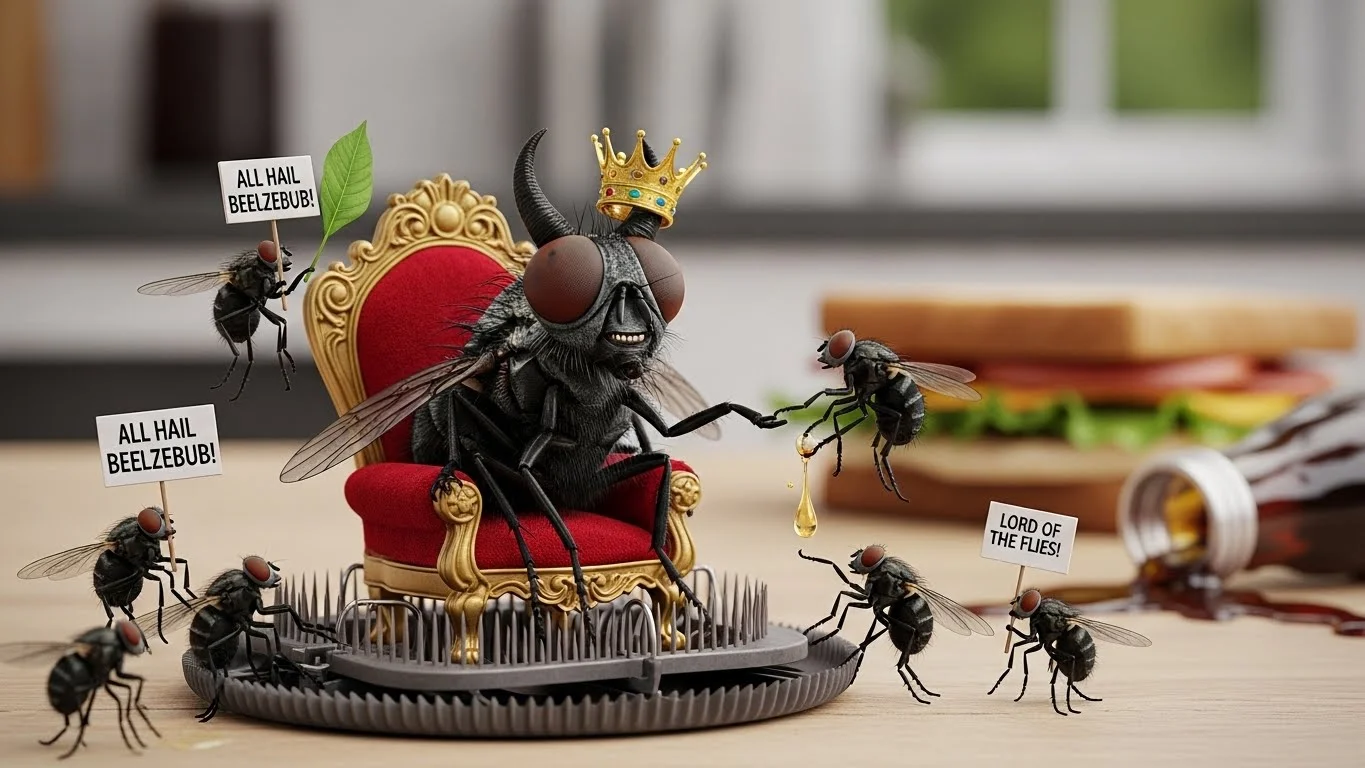
Why the Name “Lord of the Flies” Matters
The title “Lord of the Flies” is significant because flies are associated with:
Decay
Rot
Death
Corruption
Symbolically, Beelzebub represents corruption feeding on moral or spiritual decay, which is why the name feels unsettling even today.
Beelzebub Meaning in Modern Perspective (2026)
In 2026, most people encounter Beelzebub not through religion but through media, metaphors, and humor. The name has become a shorthand for chaos, evil, or extreme mischief rather than a literal belief system. Still, understanding its origins adds depth and prevents misuse, especially in serious discussions.