
What Does “Bailiwick” Mean in English?
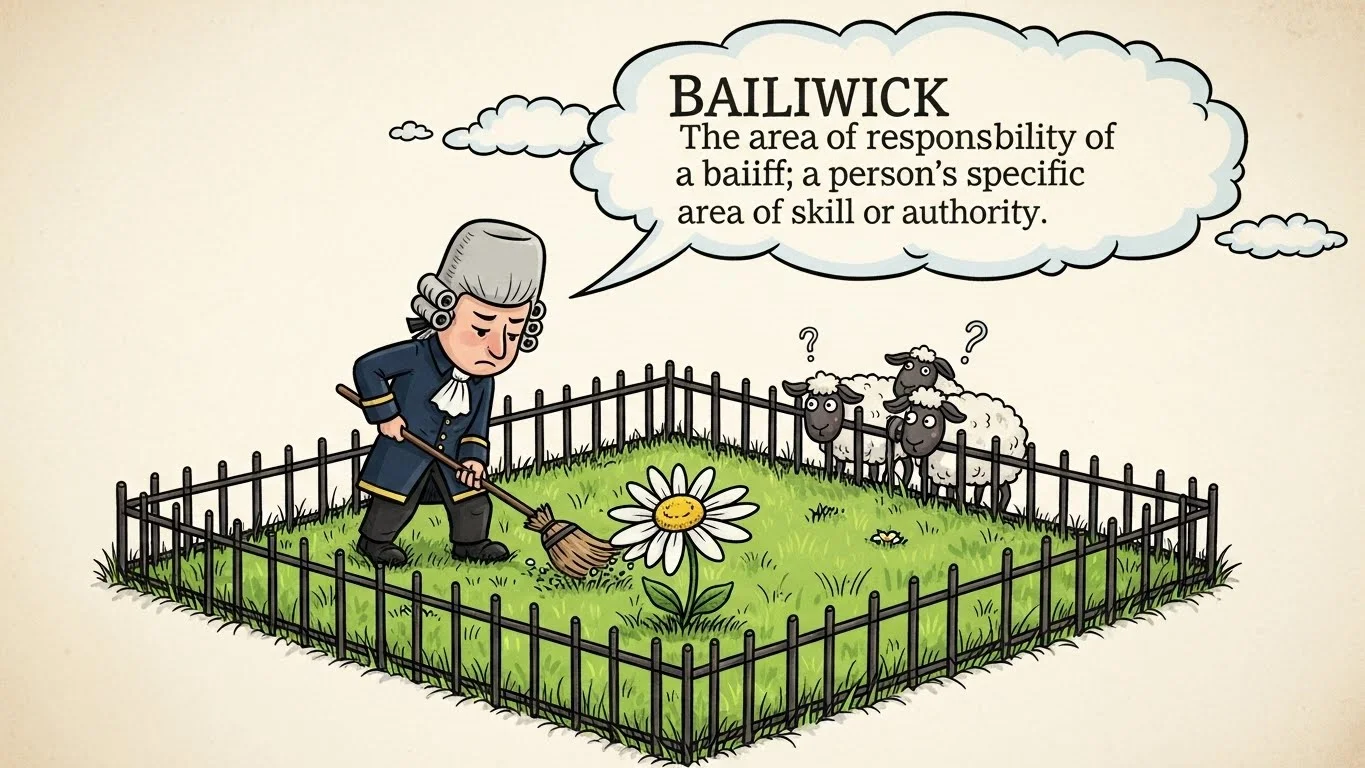
Bailiwick means someone’s area of responsibility, expertise, or special skill.
In modern usage, it usually refers to what a person knows best or is in charge of, rather than a physical place.
Simple Definition
Bailiwick = something you’re responsible for or especially good at
Two Main Meanings (Old vs Modern)
Traditional meaning (historical):
A district or area controlled by a bailiff (an old legal officer)Modern meaning (most common today):
A person’s field of expertise or responsibility
Brief History of the Word
The word bailiwick comes from Middle English and Old French. Originally, it described a legal jurisdiction managed by a bailiff. Over time, the meaning shifted from geography to personal authority and expertise, which is how we use it today.
How People Use “Bailiwick” in Real Conversations
Today, bailiwick is mostly used in professional, educational, and semi-formal settings, but you may also see it in articles, interviews, and social media posts.
Common Places You’ll See “Bailiwick”
Workplace conversations
Business meetings
News articles and opinion pieces
Academic discussions
Podcasts and interviews
LinkedIn posts
Casual vs Formal Use
Formal: “Finance falls within her bailiwick.”
Semi-casual: “Design isn’t really my bailiwick.”
Too casual (awkward): Using it in slang-heavy texting
Bailiwick sounds polite, educated, and slightly formal, so it works best in thoughtful conversations.
Real-Life Examples of “Bailiwick” in Sentences
Here are some realistic examples showing how bailiwick is used naturally, with clear explanations.
Example 1
“Marketing strategy is his bailiwick.”
Meaning:
Marketing is his area of expertise.
Example 2
“Legal matters are outside my bailiwick.”
Meaning:
The speaker is not responsible for or knowledgeable about legal issues.
Example 3
“Handling customer complaints falls within her bailiwick.”
Meaning:
That task is her responsibility.
Example 4
“Tech support isn’t my bailiwick, but I can try to help.”
Meaning:
Technology isn’t their strength, but they’re willing to assist.
Example 5
“Creative writing is more my bailiwick than technical writing.”
Meaning:
They are better at creative writing.
When to Use “Bailiwick” (And When Not To)
Appropriate Situations
Talking about skills or responsibilities
Explaining job roles
Describing expertise
Writing articles or essays
Professional communication
Inappropriate or Awkward Situations
Casual texting with friends
Internet slang conversations
Very informal social media comments
If the conversation is relaxed or slang-heavy, simpler words like “thing,” “area,” or “job” may sound more natural.
Common Mistakes & Misunderstandings
Even fluent English speakers misuse bailiwick sometimes.
Mistake 1: Thinking Bailiwick Is Only About Places
In modern English, it usually refers to skills or responsibility, not geography.
Mistake 2: Using It Like Slang
Bailiwick is not slang. It’s a formal or semi-formal word.
Mistake 3: Overusing It
Using bailiwick too often can sound unnatural. Use it when it truly fits.
Mistake 4: Confusing It With “Hobby”
A hobby is something you enjoy; a bailiwick is something you’re responsible for or skilled at.
Bailiwick vs Similar Words (Important Differences)
Understanding similar words helps you choose the best one.
Bailiwick vs Expertise
Expertise: High-level skill or knowledge
Bailiwick: Area of responsibility or comfort zone
Bailiwick vs Jurisdiction
Jurisdiction: Legal authority over an area
Bailiwick: Personal or professional domain
Bailiwick vs Specialty
Specialty: A focused skill
Bailiwick: Broader area of control or knowledge
Related Words & Expressions
You may also encounter these terms with similar meanings:
Wheelhouse: Area of strength (informal)
Domain: Field of activity or knowledge
Field: Professional area
Area of expertise: Clear and formal alternative
Comfort zone: What someone feels confident doing
These are good internal linking opportunities for related content.

Why Understanding “Bailiwick” Matters
Knowing the bailiwick meaning helps you:
Sound more professional
Understand articles and interviews
Communicate responsibilities clearly
Avoid awkward wording
Improve overall English fluency
It’s especially useful in work, education, and formal writing.