

What Does “Assent” Mean?
Simple Definition
Assent means to express approval, agreement, or acceptance, usually in a formal or official way.
In short:
Assent = a clear “yes” or agreement, often given verbally, in writing, or through a gesture.
Examples:
She nodded in assent.
The committee gave its assent to the proposal.
Origin and Background of the Word “Assent”
The word assent comes from the Latin word assentire, meaning “to agree” or “to feel toward”. Over time, it entered English through Old French and became associated with formal agreement rather than casual approval.
Because of this history, assent is commonly used in:
Legal documents
Academic writing
Ethical discussions
Government or institutional decisions
It sounds more serious and official than simply saying agree.
How “Assent” Is Used in Real Conversations
Although assent is formal, it does appear in real life—especially in professional or serious contexts.
Common Situations Where “Assent” Is Used
Legal or policy discussions
Research involving children or minors
Academic essays
Official meetings
Philosophical or ethical debates
When It Sounds Natural vs Awkward
Appropriate: “The board gave its assent to the plan.”
Awkward: “I assent to pizza tonight.”
In casual speech, agree sounds more natural.
Assent vs Consent: Important Difference
This is one of the most common misunderstandings.
Assent
Agreement or approval
Often used when the person cannot legally consent
Common in research involving minors
Consent
Legal permission
Given by someone who has legal authority
Example:
A child gives assent to participate in a study, but a parent gives consent.
This distinction is extremely important in law, medicine, and ethics.
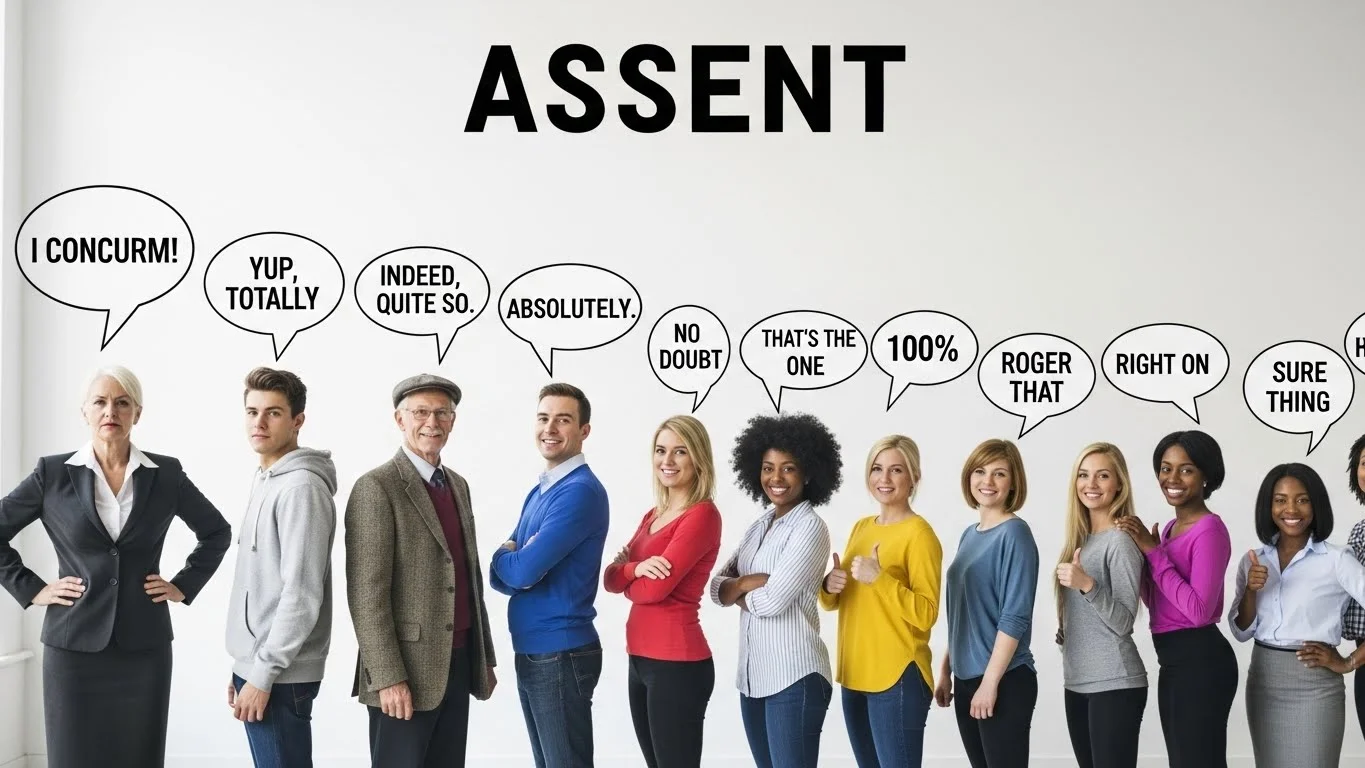
Real-Life Examples of “Assent” in Sentences
Example 1:
“The judge nodded in assent.”
Explanation: The judge showed agreement without speaking.
Example 2:
“The child gave verbal assent to the procedure.”
Explanation: The child agreed, even though legal consent came from a parent.
Example 3:
“The committee granted its assent after reviewing the proposal.”
Explanation: A formal approval process.
Example 4:
“He smiled in silent assent.”
Explanation: Agreement shown through body language.
Example 5:
“Royal assent was required for the bill to become law.”
Explanation: A formal constitutional process.
Assent Meaning in Law and Government
In legal and governmental systems, assent has a very specific meaning.
Royal Assent
In many countries, a bill passed by parliament becomes law only after royal assent, meaning approval by a monarch or head of state.
Legal Context
Indicates formal approval
Often ceremonial but legally necessary
Cannot be casual or implied
Assent Meaning in Psychology and Research
In research involving children or vulnerable individuals, assent plays a critical ethical role.
Why Assent Matters
Respects personal autonomy
Ensures understanding
Protects participants
Even if someone cannot legally consent, their assent shows willingness, which is ethically important.
Common Mistakes & Misunderstandings
Mistake 1: Using Assent in Casual Chat
Saying “I assent” in everyday texting sounds unnatural.
Mistake 2: Confusing Assent With Consent
They are not interchangeable, especially legally.
Mistake 3: Thinking Assent Must Be Written
Assent can be verbal, written, or non-verbal.
Mistake 4: Assuming Assent Is Always Legally Binding
Assent does not always carry legal authority.
Related Words and Similar Terms
Consent: Legal permission
Agreement: General approval
Approval: Positive judgment
Acquiescence: Passive acceptance
Endorsement: Public approval
These terms overlap but are not exact replacements for assent.
Assent Meaning in Simple English (Quick Summary)
Assent means to agree or approve formally
Often used in law, ethics, and academics
More serious than “agree”
Different from legal consent
Can be shown verbally or through actions