
What Does “ADAS” Mean?
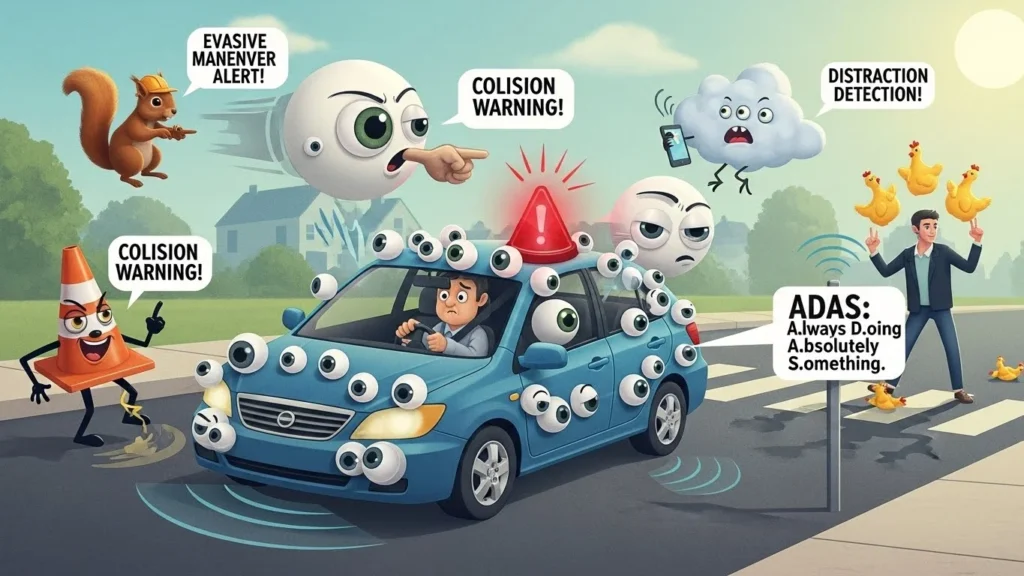
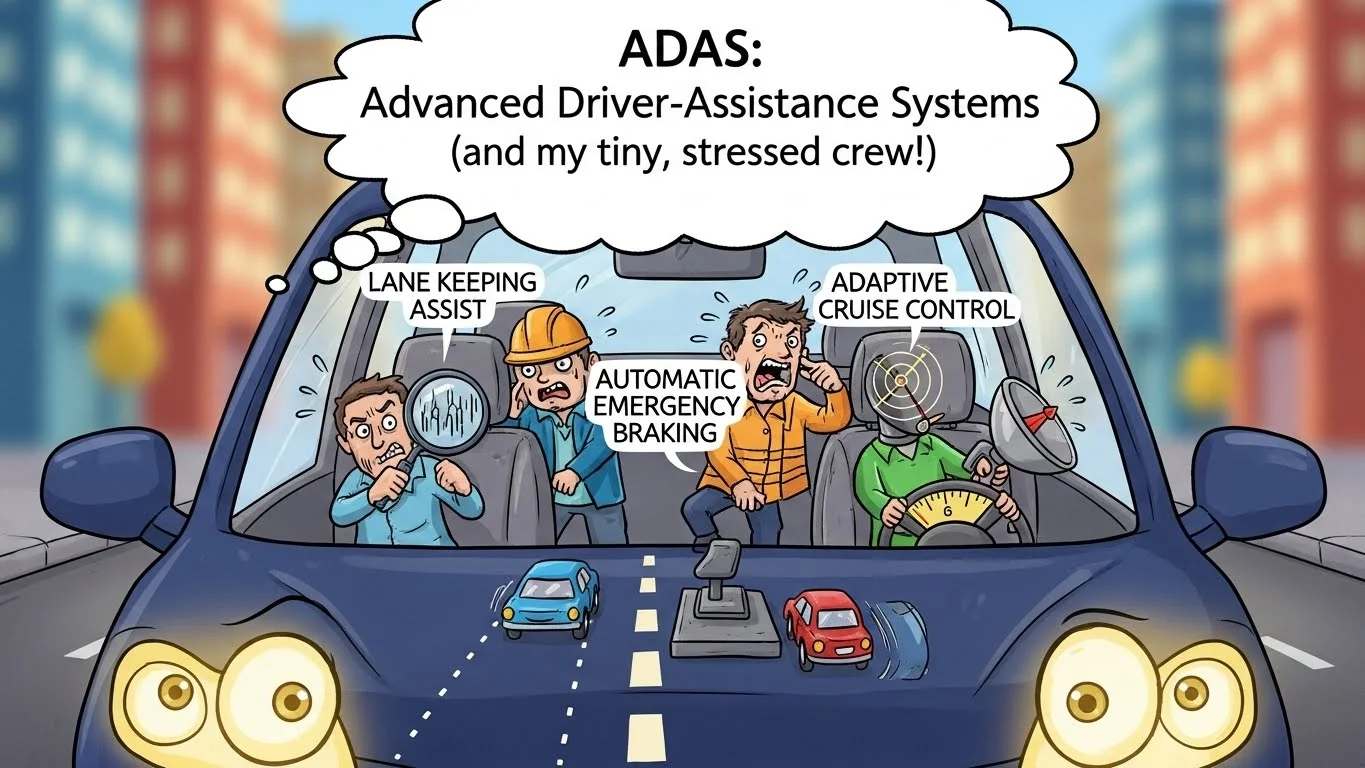
ADAS stands for “Advanced Driver Assistance Systems.”
At its core, ADAS is a set of electronic technologies that help drivers operate vehicles safely and efficiently. These systems use sensors, cameras, radar, and software to provide warnings or assist in driving tasks.
Key idea: ADAS is about making driving safer, easier, and smarter.
How ADAS Works
ADAS relies on a combination of technologies to monitor the car’s environment:
Cameras: Detect lane markings, traffic signs, and obstacles
Radar & Lidar: Detect distances and speed of nearby vehicles
Ultrasonic sensors: Assist in parking and low-speed maneuvers
Software algorithms: Analyze data and provide warnings or corrective actions
These systems can either alert the driver or actively intervene, depending on the level of automation.
Common Features of ADAS
Here are the most popular ADAS features found in modern cars:
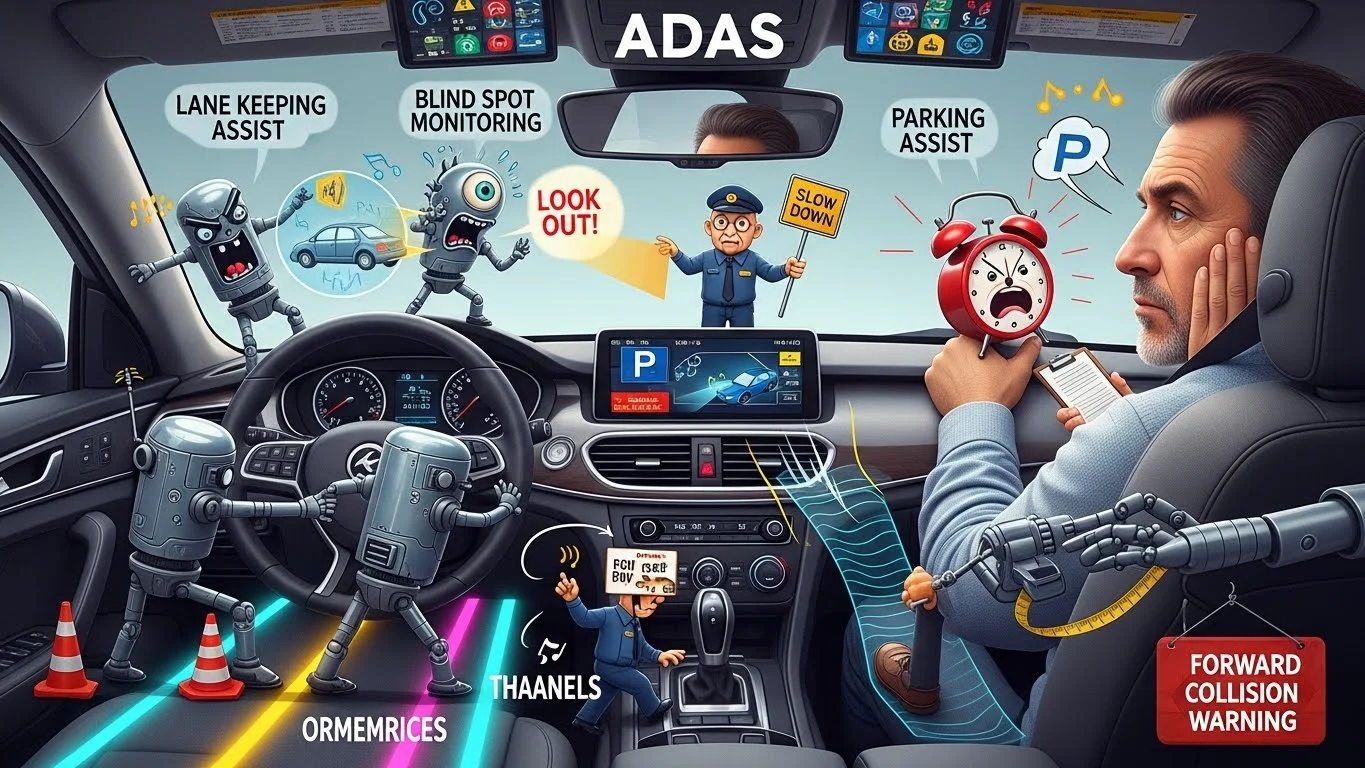
Lane Departure Warning (LDW) – Alerts when the car drifts out of the lane.
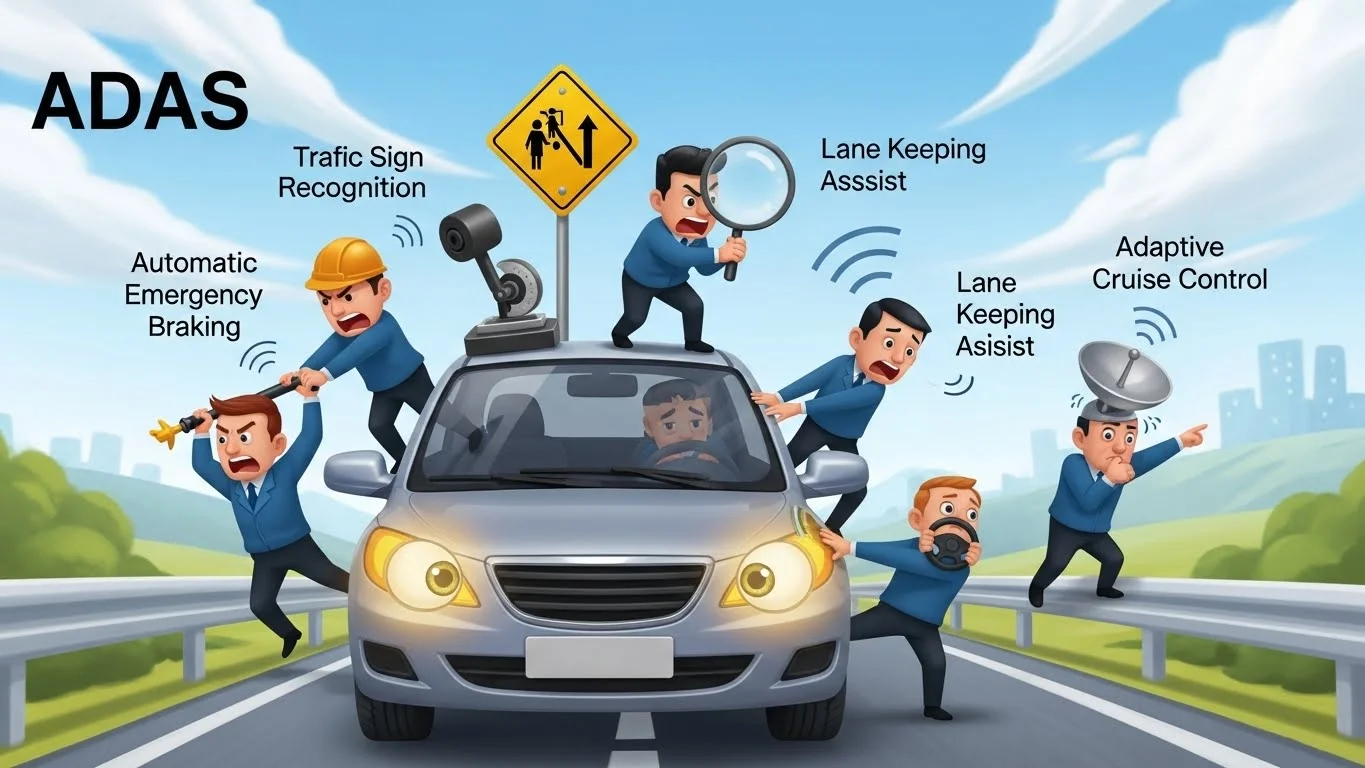
Lane Keeping Assist (LKA) – Gently steers the car back into the lane.
Adaptive Cruise Control (ACC) – Adjusts speed to maintain safe distance.
Automatic Emergency Braking (AEB) – Brakes automatically to prevent collisions.
Blind Spot Detection (BSD) – Warns of vehicles in blind spots.
Traffic Sign Recognition (TSR) – Detects and alerts you about speed limits and signs.
Parking Assist / Rear Cross-Traffic Alert – Helps with parking safely.
Each feature is part of the broader ADAS ecosystem, improving safety and reducing human error.
Levels of ADAS
ADAS systems vary based on automation level:
Level 0 – No assistance, traditional driving
Level 1 – Single assistance (e.g., cruise control or lane assist)
Level 2 – Partial automation (steering + acceleration/deceleration assistance)
Level 3 – Conditional automation (car handles most tasks under certain conditions)
Level 4 & 5 – High/full automation (minimal or no human input)
Most vehicles today offer Level 1 or Level 2 ADAS.
ADAS Meaning in Real-Life Driving
Benefits
Increases road safety
Reduces accident risks
Assists in long trips or traffic
Provides confidence for new drivers
Limitations
Not a replacement for a human driver
Sensors can fail in bad weather
High-end features may be expensive
Example:
“My new car has ADAS, so it brakes automatically if I get too close to the car in front.”
Meaning: Advanced Driver Assistance Systems are actively helping the driver.
ADAS in Modern Cars
Manufacturers like Tesla, BMW, Mercedes-Benz, Toyota, and Honda offer various ADAS packages. These are often marketed as “Safety Assist,” “Driver Assistance,” or branded technology names.
Some cars now include semi-autonomous features, such as self-parking or highway driving assist, which are advanced ADAS systems.
ADAS vs Autonomous Driving
While ADAS helps the driver, it does not make the car fully autonomous. Full self-driving is still being developed, whereas ADAS is widely available today.
Key difference:
ADAS = assistance
Autonomous vehicle = full control without human input
Common Misunderstandings About ADAS
ADAS will drive the car for you.
False. Most systems assist but still require driver attention.
ADAS is only for luxury cars.
False. Many mid-range cars now offer ADAS features.
ADAS replaces the need for defensive driving.
False. Human judgment is still essential.
All ADAS systems are the same.
False. Features vary by brand and car model.
Related Terms and Technology
ADAS sensors – Cameras, radar, ultrasonic, and lidar
Adaptive Cruise Control (ACC) – Part of ADAS
Lane Keeping Assist (LKA) – Part of ADAS
Forward Collision Warning (FCW) – Alerts for potential crashes
Autonomous Driving – Higher-level automation beyond ADAS
These terms often appear together in car tech discussions.
Why ADAS Matters in 2026
ADAS is becoming a standard in modern vehicles because:
Road safety is a top priority
Insurance companies reward ADAS-equipped cars
Technology is more affordable and reliable
It paves the way for fully autonomous vehicles
Knowing what ADAS means helps drivers make informed decisions when buying a new car.
What Does “ADAS Meaning” Really Come Down To?
When people search “ADAS meaning”, they want clarity on how it helps drivers and cars. The simplest explanation is:
ADAS stands for Advanced Driver Assistance Systems, a collection of technologies in vehicles that assist drivers with safety, convenience, and partial automation.