

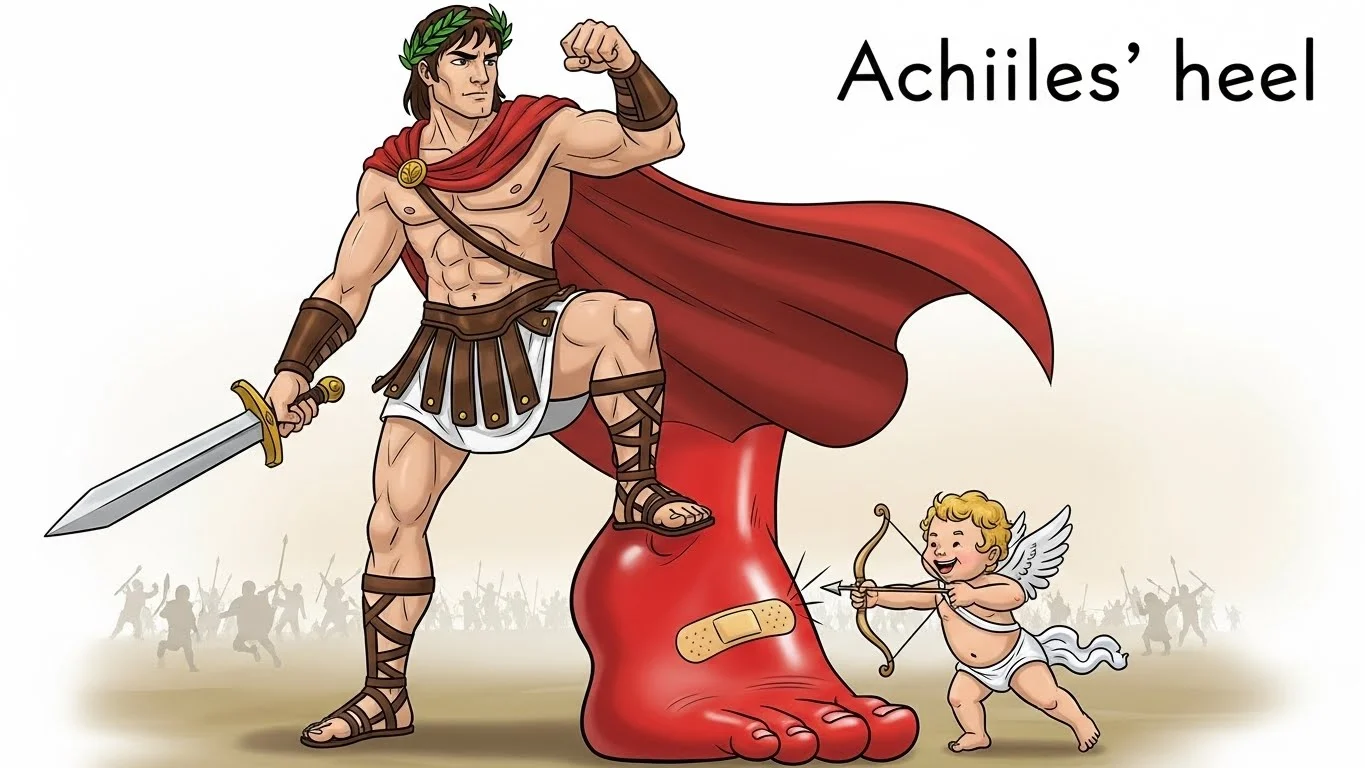
What Does “Achilles Heel” Mean?
The phrase Achilles heel refers to a critical weakness in an otherwise strong person, system, or organization.
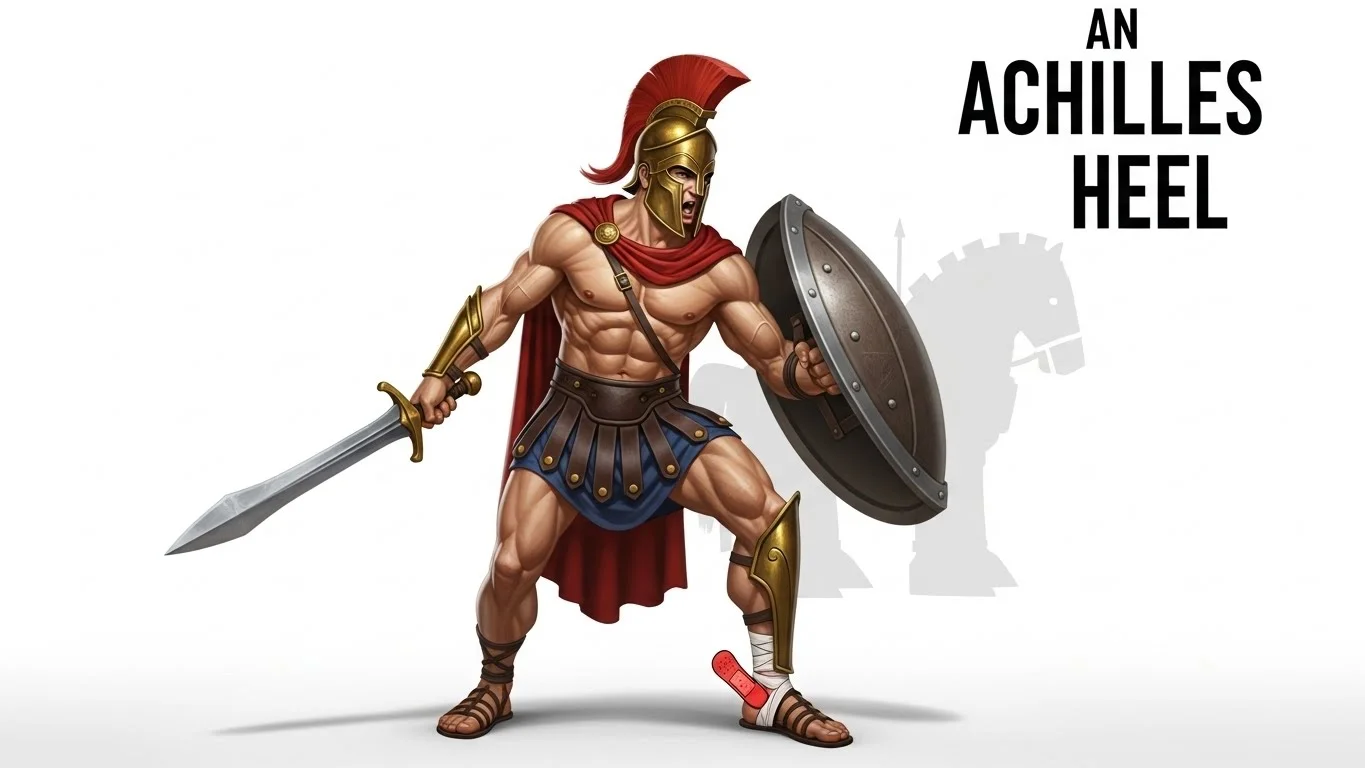
Literal meaning (mythology): The vulnerable heel of Achilles, the Greek hero of the Trojan War.
Figurative meaning: A small but significant weakness that can lead to downfall, despite overall strength or ability.
Origins:
Greek mythology: Achilles was a near-invincible warrior. His mother dipped him in the River Styx to make him immortal but held him by his heel. That heel remained vulnerable, and he was eventually killed by an arrow striking it.
Entered English: The term has been used metaphorically since the 16th century to describe hidden weaknesses.
Context matters:
Personal: “Procrastination is my Achilles heel.”
Professional: “Poor communication is the company’s Achilles heel.”
Sports: “Lack of teamwork was the team’s Achilles heel.”
How People Use “Achilles Heel” in Real Conversations
This expression is widely used in both formal and informal contexts, literature, and online discussions.
Platforms
Texting & WhatsApp: Casual usage to describe personal flaws or habits.
Social Media: Posts or memes about weaknesses or vulnerabilities.
Business & Professional Writing: Describes organizational or systemic weaknesses.
Literature & Academic: Used metaphorically in essays or articles.
When It’s Appropriate
Describing a minor but critical weakness
Talking about personal habits, character traits, or vulnerabilities
Referring to flaws in systems, organizations, or strategies
When It Feels Awkward
Overusing in casual conversation without explanation
Using literally (as if someone’s actual heel is weak)
Confusing the meaning with total weakness rather than a specific vulnerability
Pro Tip: Use Achilles heel metaphorically to highlight a key weakness, but make sure your audience understands the reference.

Real-Life Examples of “Achilles Heel” in Text Messages
Personal context:
Mia: “Chocolate is my Achilles heel—I can never resist it.”
Jay: “I totally understand, me too!”
Explanation: Refers to a personal weakness despite overall discipline.
Professional context:
Alex: “Their Achilles heel is outdated technology; it slows down the whole team.”
Sam: “We should offer an upgrade solution.”
Explanation: Refers to a specific vulnerability in a system.
Sports context:
Player1: “Lack of defense is the team’s Achilles heel.”
Player2: “That explains the last game’s loss.”
Explanation: Specific weakness in performance despite overall skill.
Humorous context:
Emma: “Netflix bingeing is my Achilles heel.”
Liam: “Mine too, we should start a support group.”
Explanation: Playful usage describing a minor but tempting weakness.
Common Mistakes & Misunderstandings
Misinterpreting as overall weakness: An Achilles heel is a specific vulnerability, not total ineptitude.
Literal confusion: Some people think it’s about a physical heel.
Misusing in slang: It should describe something impactful or significant, not trivial.
Overuse in casual memes: Can reduce impact if used too broadly.
Tip: Ensure context makes it clear what the specific “Achilles heel” is.
Related Slangs & Expressions
Weak spot: Direct synonym, simpler for casual use.
Vulnerability: Broader term, often used in professional or emotional contexts.
Soft spot: Refers to both weakness and emotional susceptibility.
Kryptonite: Pop culture reference for a critical weakness, like Superman’s.
Blind spot: Refers to a hidden flaw or limitation.
Internal linking opportunities: You could link to “weak spot meaning,” “vulnerability meaning,” or “kryptonite meaning” for SEO purposes.