
What Does “Abstraction” Mean?
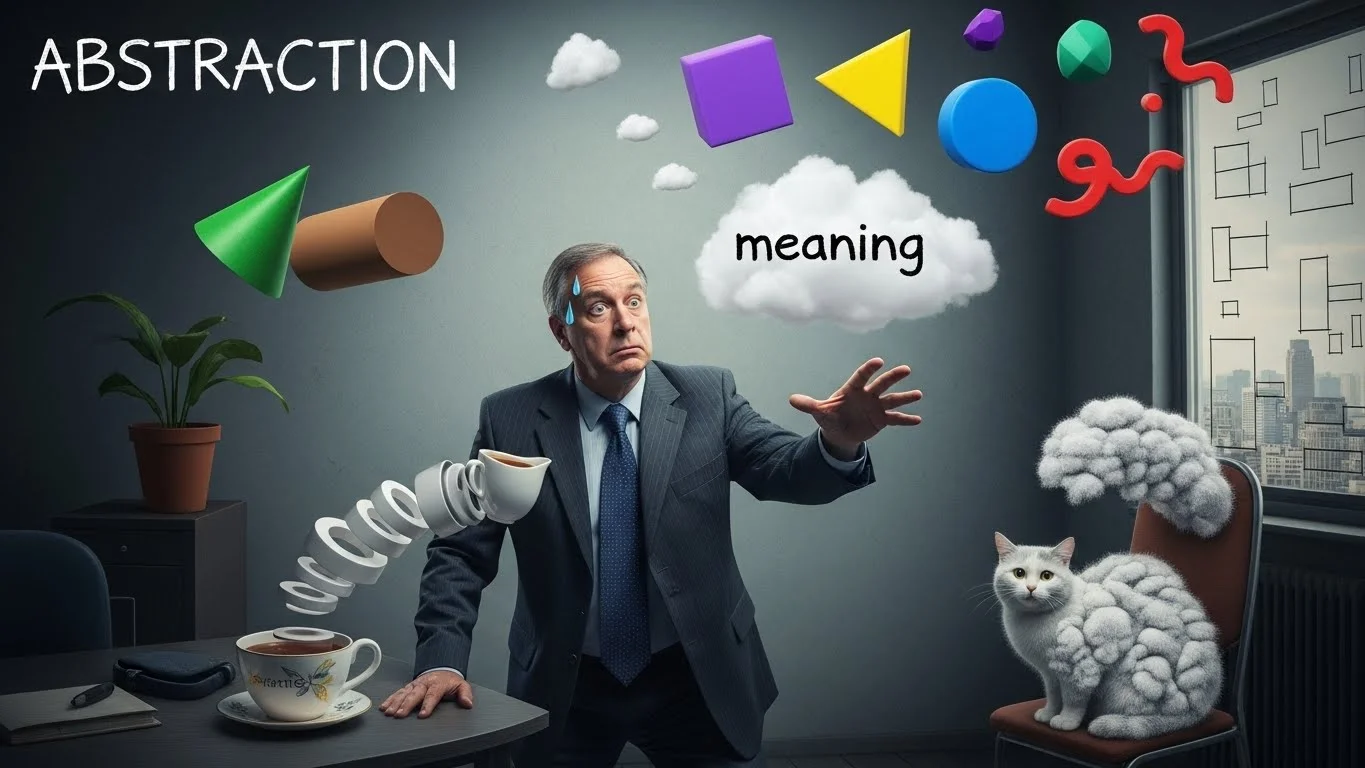
Abstraction is the process of simplifying something by focusing on its essential features while ignoring irrelevant details.
In simple words:
Abstraction = simplifying complex things to focus on the important parts
Abstraction can apply to many areas:
Art: Showing ideas or emotions instead of realistic details
Programming/Computing: Hiding complex code details to focus on functionality
Thinking/Philosophy: Considering ideas in a general or theoretical way
Example:
“The artist’s abstraction of the city made it feel alive without showing every building.”
Meaning: The artwork simplified the city to its essential impression.
Origin and History of the Word Abstraction
Latin roots: Comes from abstrahere, meaning “to draw away” or “to separate”
English adoption: Used in the 16th century to describe the act of separating ideas or concepts from reality
Modern use: Now widely used in art, technology, philosophy, and science
This explains why abstraction is often about separating or simplifying complex details.
How Abstraction Is Used Today
1. In Art
Abstract art uses shapes, colors, and forms to convey ideas instead of realistic depictions.
Example:
“Her painting is full of abstraction, representing emotions rather than people.”
2. In Programming and Technology
Programming abstraction hides unnecessary details so programmers can focus on higher-level functionality.
Example:
“Using functions is a form of abstraction—it keeps the code clean and easier to read.”
3. In Thinking or Philosophy
Mental abstraction helps people focus on concepts instead of concrete examples.
Example:
“Discussing justice in theory is an abstraction from real-world cases.”
4. Everyday Conversation
People sometimes use abstraction informally to mean something vague, theoretical, or simplified.
Example:
“Let’s not get lost in abstraction—what’s the actual plan?”
Real-Life Examples of “Abstraction” in Text and Conversation
Example 1 (Art):
“The gallery displayed abstraction in its modern art section.”
Meaning: Art that represents ideas rather than realistic scenes.
Example 2 (Programming):
“Objects in coding provide abstraction for complex data structures.”
Meaning: Programming simplifies data management.
Example 3 (Philosophy):
“Freedom as a concept is an abstraction.”
Meaning: General idea rather than specific instance.
Example 4 (Casual Chat):
“Stop talking in abstraction and give me an example.”
Meaning: Don’t be vague—be concrete.
Example 5 (Education):
“Mathematics often teaches students abstraction to solve complex problems.”
Meaning: Simplifying concepts to understand patterns.
Common Mistakes & Misunderstandings
1. Thinking Abstraction Means Confusion
Abstraction simplifies, but some assume it makes things harder—context matters.
2. Using It Only in Art
While common in art, abstraction applies to programming, philosophy, and everyday thinking.
3. Confusing Abstraction With Generalization
Abstraction: Focuses on essentials while ignoring details
Generalization: Broadens an idea to cover multiple cases
4. Overusing the Term in Casual Speech
Saying “this is abstraction” without context can confuse listeners.
Related Words and Terms
Understanding abstraction meaning can be easier with related words:
Abstract: Adjective describing something simplified or non-literal
Simplification: Making something easier to understand
Conceptualization: Forming an idea of something complex
Generalization: Broadening specifics into a general idea
Symbolism: Using symbols to represent ideas, often in art
These words are often used alongside abstraction in various fields.
Why Abstraction Is Important in 2026
In technology: Helps programmers and engineers manage complex systems
In art: Enables creative expression beyond literal representation
In thinking: Aids problem-solving, strategy, and theory
In education: Teaches students to identify patterns and focus on essentials
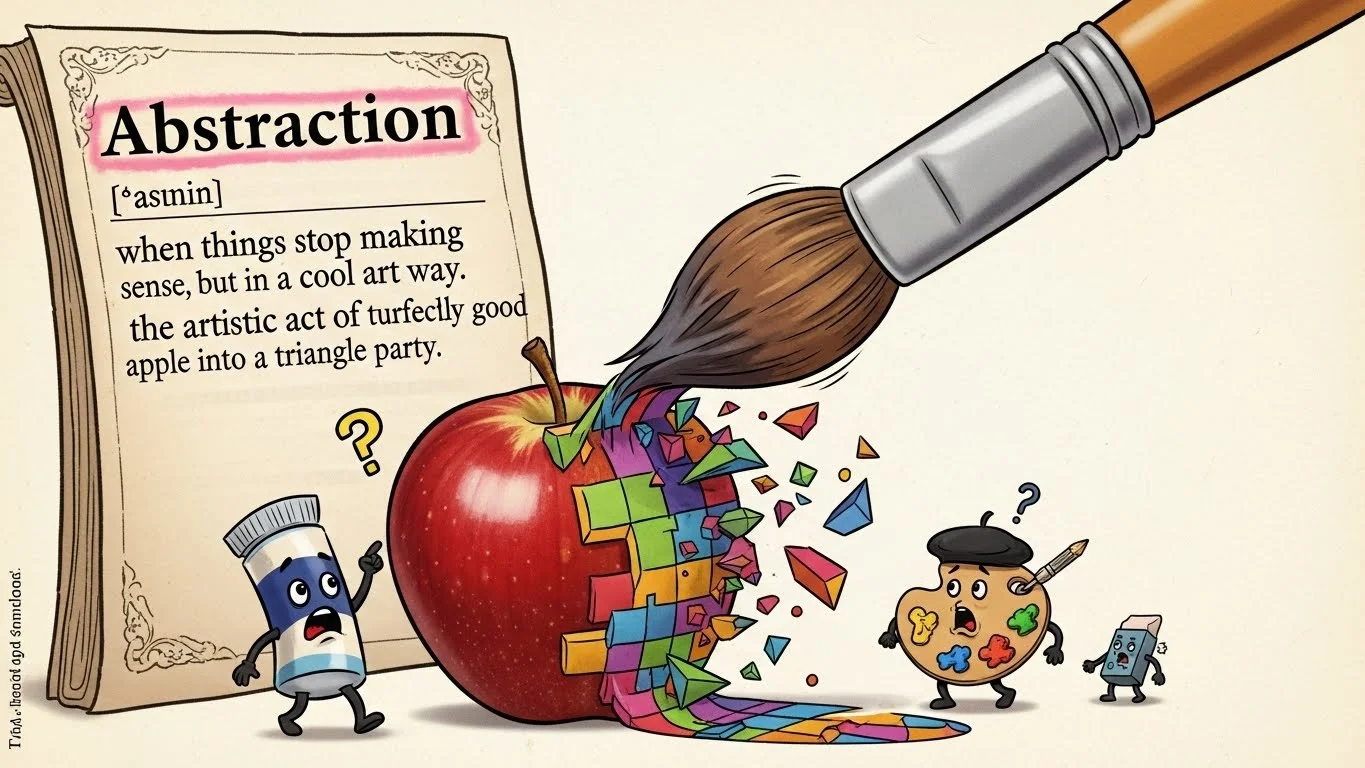
Abstraction remains a key skill in learning, designing, and understanding the modern world.