
What Does “Abridge” Mean?
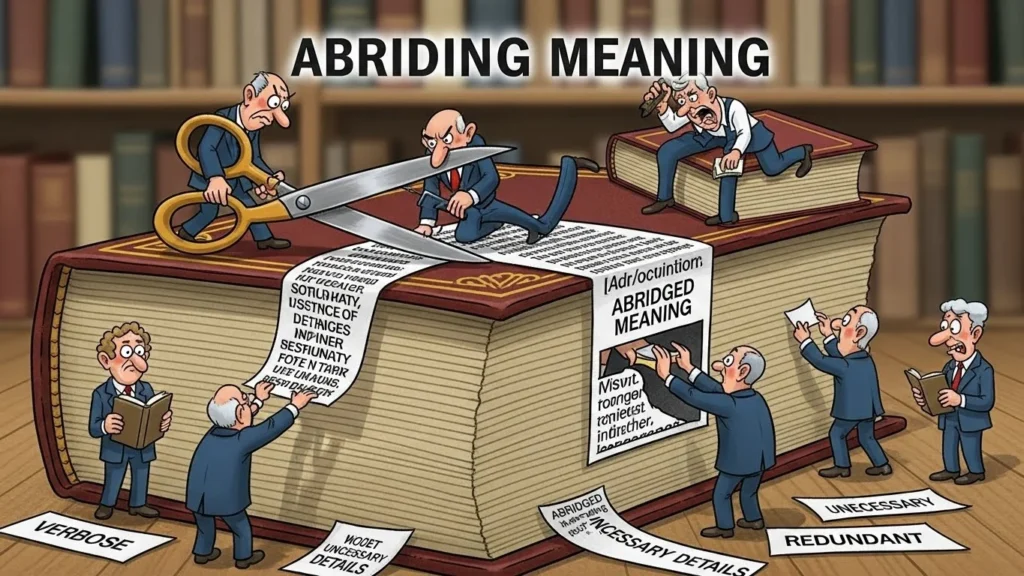
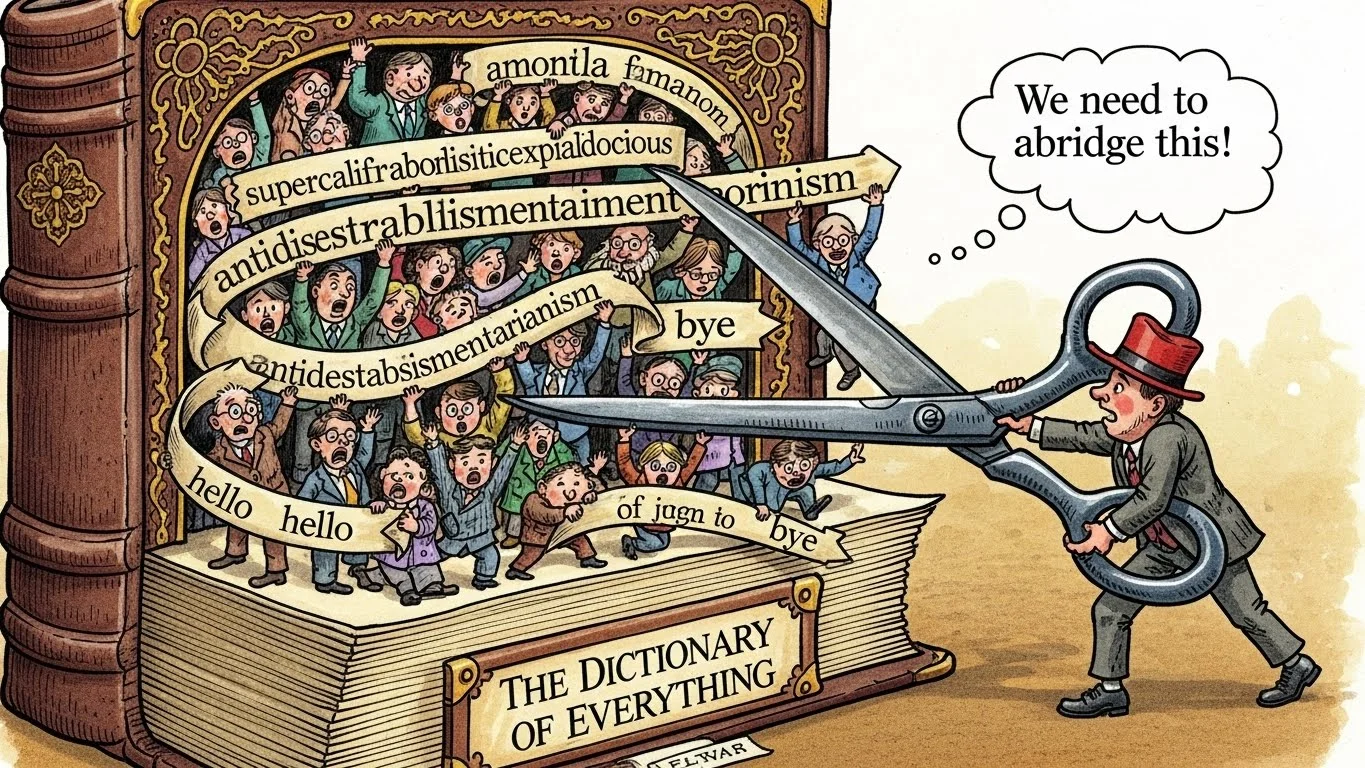
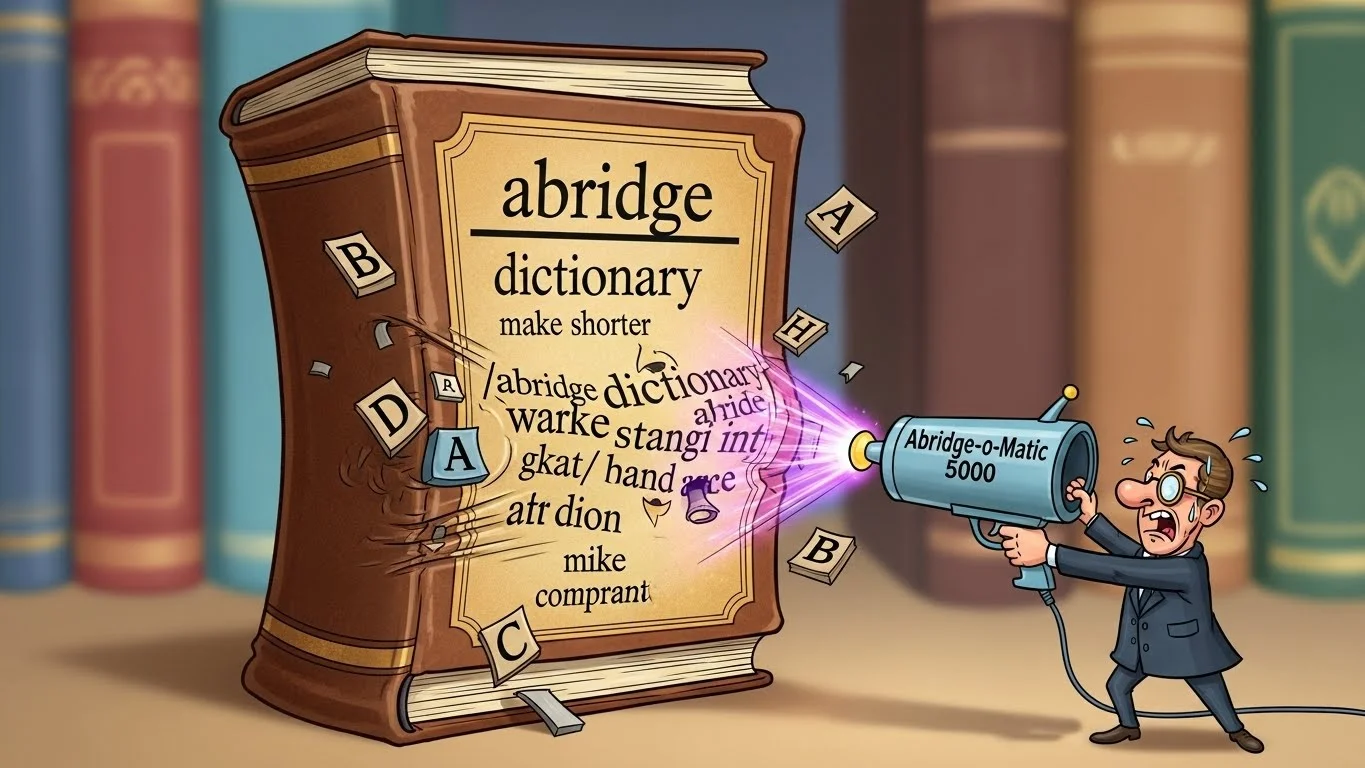
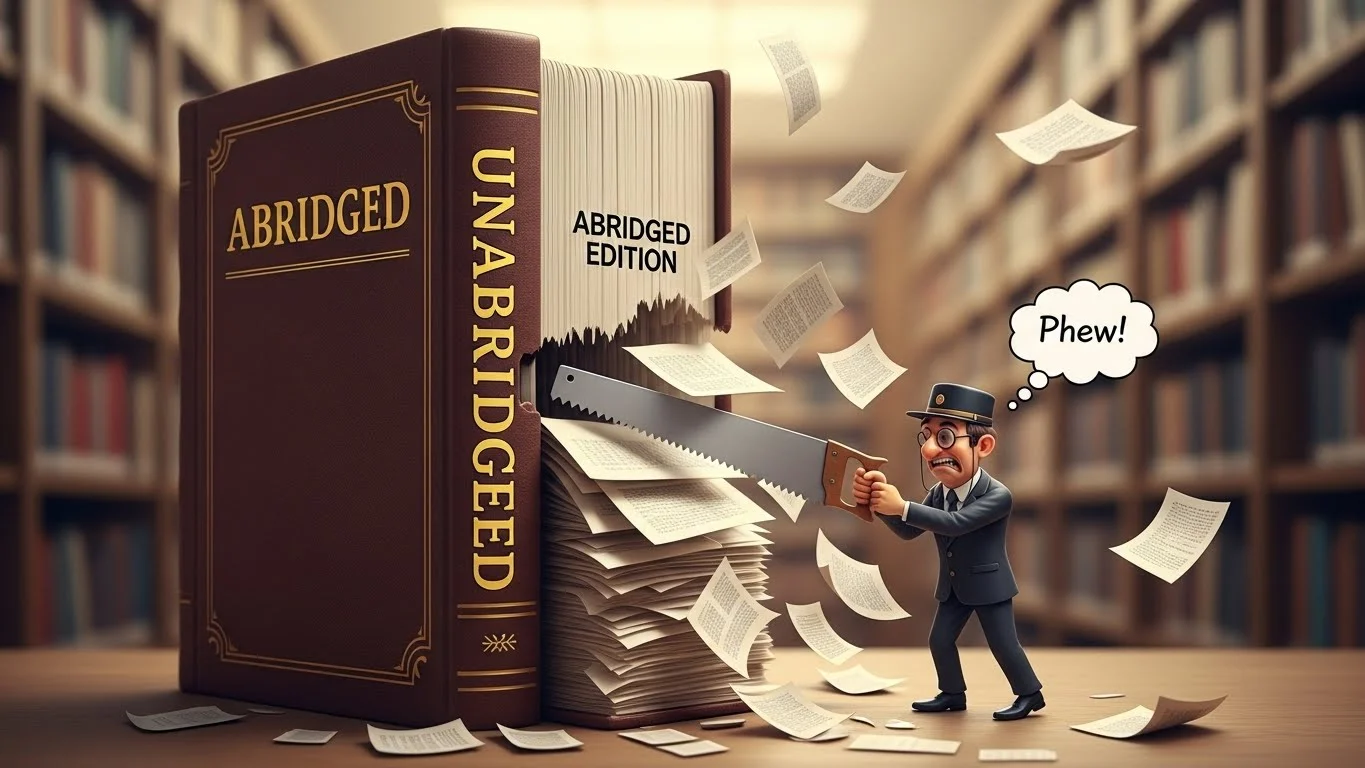
The word abridge is a verb that generally means to shorten or condense something while retaining the main points.
Formal meaning: To reduce the length of a text, speech, or piece of content without changing its core meaning.
Figurative meaning: To limit, diminish, or curtail something, such as rights or privileges.
Origins:
The term comes from the Middle English “abridgen,” meaning “to shorten,” which itself derives from Old French “abréger.” It has been used in English since the 15th century in literary and legal contexts.
Context matters:
Literary: “The editor abridged the novel for young readers.”
Legal: “The new law does not abridge the freedom of speech.”
Casual chat: “Can you abridge the instructions so it’s easier to follow?”
How People Use “Abridge” in Real Conversations
While abridge is more formal than everyday slang, it still appears in academic, professional, and even casual contexts.
Platforms
Texting & WhatsApp: Occasionally used to ask for a summary or simplified version.
Social Media: Posts discussing condensed versions of books, speeches, or articles.
Academic & Professional Writing: Common in editing, summarizing, and legal discussions.
Forums & Discord: Used when sharing summarized content or instructions.
When It’s Appropriate
Discussing writing, summaries, or shortened versions of content
Talking about reducing something while keeping the essentials
Academic or professional discussions
When It Feels Awkward
Casual conversations where “shorten” or “simplify” would sound more natural
Overusing in informal chat, which can seem pretentious
Pro Tip: Using abridge signals precision and sophistication, especially in writing or professional discussions.
Real-Life Examples of “Abridge” in Text Messages
Academic context:
Mia: “The teacher asked us to abridge the article for the presentation.”
Jay: “Got it, I’ll summarize it.”
Explanation: Refers to shortening text while keeping key points.
Professional context:
Alex: “We need to abridge the report to fit the executive summary.”
Sam: “I’ll condense the data accordingly.”
Explanation: Reducing content while retaining essentials.
Casual/funny context:
Emma: “Can you abridge your story? I only have five minutes!”
Liam: “Okay, here’s the short version…”
Explanation: Requesting a shorter explanation in conversation.
Legal context:
“The amendment does not abridge citizens’ rights under the constitution.”
Explanation: Ensuring that reduction or limitation does not compromise legal rights.
Common Mistakes & Misunderstandings
Confusing with “abridged” in casual speech: Always ensure context is clear—can refer to text or rights.
Overusing in informal chat: Simple words like “shorten” or “summarize” may be more natural.
Assuming it means delete entirely: Abridge implies condensing, not complete removal.
Mispronunciation: Correct pronunciation is uh-brij.
Tip: Use abridge when you want to emphasize thoughtful condensing or summarizing.
Related Slangs & Expressions
Condense: Shorten text or content without losing meaning.
Summarize: Provide the main points in a shorter form.
Edit: Make changes to improve or reduce content.
Trim: Informally reduce or shorten something.
Cut down: Simplified way to express abridging content.
Internal linking opportunities: You could link to “summarize meaning,” “condense meaning,” or “edit meaning” for SEO and engagement.