

What Does “Upend” Mean in Chat or Text?
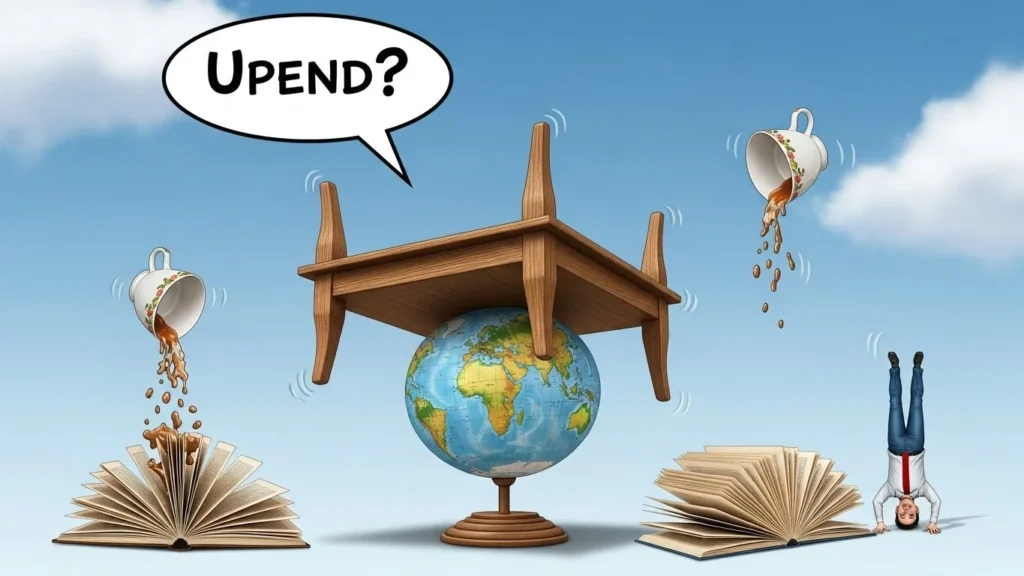
Upend means to completely change, disrupt, or turn something upside down—often suddenly or unexpectedly. It suggests that the normal order of things is disturbed or replaced.
In text or chat, upend usually implies:
A big change, not a small one
Disruption of routines, systems, or plans
Something unexpected or dramatic
In simple words:
Upend = cause major disruption or overturn how things normally work.
Different Meanings of “Upend” Based on Context
The upend meaning stays consistent, but the tone changes depending on where it’s used.
1. Literal Meaning
Originally, upend meant to physically turn something upside down.
Example:
“He upended the box on the table.”
Meaning: He flipped the box over.
2. Figurative or Modern Meaning (Most Common)
Today, upend is mostly used figuratively to describe systems, plans, lives, or industries being disrupted.
Example:
“The new technology upended the market.”
Meaning: It completely changed how the market works.
This figurative meaning is what you’ll see most in news articles, essays, and serious conversations.
How People Use “Upend” in Real Conversations
In everyday communication, upend in chat is less common than simpler words like “change” or “ruin,” but it’s often used when someone wants to sound impactful or serious.
Common Places Where “Upend” Is Used
News headlines: “Decision upends decades of policy”
Work or academic writing: Reports, presentations, essays
Serious discussions: Politics, economy, technology
Occasional texts: When emphasizing major disruption
When It Sounds Natural vs. Awkward
Sounds natural when:
Talking about major change
Writing formally or semi-formally
Describing large-scale impact
Sounds awkward when:
Used for small or everyday changes
Used jokingly without context
Overused in casual texting
For example, saying “This coffee upended my morning” sounds exaggerated unless you mean something truly disruptive.

Real-Life Examples of “Upend” in Text and Conversation
Here are realistic examples showing what does upend mean in text and real usage.
Example 1 (News-style):
“The ruling upended the entire legal system.”
Meaning: The decision caused major structural change.
Example 2 (Work chat):
“This update could upend our workflow.”
Meaning: It may significantly disrupt how work is done.
Example 3 (Personal life):
“The sudden move upended her plans.”
Meaning: Her plans were completely disrupted.
Example 4 (Literal):
“He accidentally upended his drink.”
Meaning: He knocked it over.
Example 5 (Serious text):
“That announcement upended everything we prepared for.”
Meaning: All prior expectations were overturned.
Each example shows that upend signals intensity and scale, not minor change.
Common Mistakes & Misunderstandings
Many learners misuse upend meaning in English, especially in casual contexts.
1. Using Upend for Small Changes
Upend implies big disruption, not minor adjustments.
Incorrect:
“This new ringtone upended my phone.”
Correct:
“This new update upended how the app works.”
2. Confusing Upend With “End”
Upend does not mean “finish” or “stop.” It means overturn or disrupt.
3. Overusing It in Casual Chat
Upend sounds formal and dramatic. Overuse can feel unnatural.
4. Assuming It’s Always Negative
Upending can be positive or negative, depending on context.
Example:
“Innovation upended outdated practices.” (positive)
5. Forgetting the Object
Upend usually needs something to act on: plans, systems, routines, lives.
Related Words & Similar Meanings
If you’re learning upend meaning, these related terms help clarify usage:
Disrupt: Interrupt normal flow
Overturn: Reverse a decision or system
Shake up: Cause change or excitement
Transform: Change completely (often positively)
Destabilize: Make something unstable
These words are often used alongside upend in articles and discussions.
Why “Upend” Is Common in 2026
The word upend is popular in 2026 because it fits perfectly with:
Rapid technological change
Economic and political shifts
Social and workplace transformations
Writers and speakers use upend to capture sudden, high-impact change, which explains why searches for upend meaning continue to rise.