
What Does “Interface” Mean?
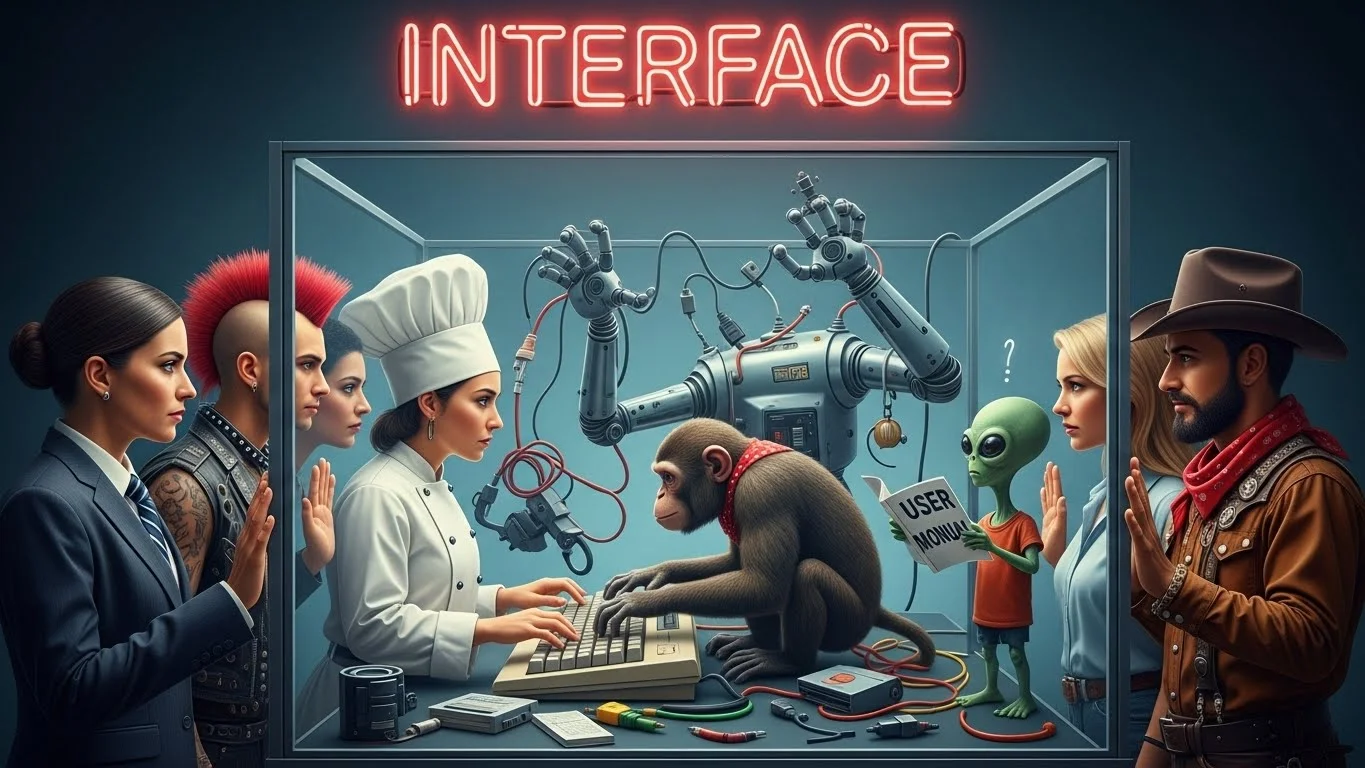
At its core, an interface is a point of interaction or connection between two systems, devices, or people.
Clear Definition
Interface (noun): A surface or point where two different systems, devices, or entities meet and communicate.
It allows information exchange or interaction
Can be physical or virtual
Exists in technology, communication, and other systems
Meaning Based on Context
| Context | Interface Meaning |
|---|---|
| Technology/Computers | The visual layout or software that allows a user to interact with a system |
| Hardware | The physical connection between devices (e.g., USB interface) |
| Communication/People | The point at which two groups or individuals meet and interact |
| Science & Engineering | A boundary between two different materials or phases (e.g., air-water interface) |
Origin and History of the Word Interface
The term comes from Latin roots “inter” (between) and “facies” (face or surface), meaning “between faces” or “a surface connecting two things.”
First used in technology in the mid-20th century
Originally described hardware connections
Later extended to software and human-computer interactions
Now widely used in both tech and everyday communication
How People Use “Interface” in Real Life
The word interface is most common in tech but has broader usage.
Common Places You’ll Hear It
Software design (UI/UX)
Device connections (computers, phones, electronics)
Networking and communications
Engineering and science reports
Business or organizational collaboration
Examples in Everyday Speech
“The interface of this app is really user-friendly.”
“Plug the cable into the correct interface on your computer.”
“Our teams need a better interface for smooth communication.”
Types of Interfaces
1. User Interface (UI)
The point where a human interacts with software or hardware
Examples: App screens, website layouts, buttons, icons
2. Hardware Interface
The physical connection between devices
Examples: USB ports, HDMI, Bluetooth connections
3. Network Interface
Connection point between computers or devices on a network
Examples: Wi-Fi adapters, Ethernet ports
4. Human-Human Interface
Interaction between people or groups
Example: Collaborative workspaces, meetings, messaging platforms
5. Material/Scientific Interface
Boundary between two substances
Example: Oil-water interface, metal-semiconductor interface
Real-Life Examples of Interface Meaning
Example 1: Technology
“The new phone has an intuitive interface that makes apps easy to navigate.”
Explanation: Refers to the software layout and user interaction design.
Example 2: Hardware
“Connect your hard drive to the USB interface on the laptop.”
Explanation: Refers to the physical point of connection.
Example 3: Networking
“The network interface must be configured before connecting to the server.”
Explanation: Refers to the network connection point.
Example 4: Communication
“The interface between marketing and sales teams needs improvement.”
Explanation: Refers to points of collaboration and interaction between teams.
Example 5: Science
“The air-water interface creates unique chemical reactions.”
Explanation: Refers to the boundary between two substances.
Common Mistakes & Misunderstandings
Mistake 1: Thinking Interface Only Means Software
It also applies to hardware, communication, and science.
Mistake 2: Confusing Interface With Function
Interface is where interaction happens, not the action itself.
Mistake 3: Using Interface Too Casually
In tech or science, interface has a specific technical meaning; don’t confuse it with “connection” in everyday terms.
Mistake 4: Assuming It’s Only Physical
Virtual and digital interfaces are equally valid.

Why Understanding Interface Matters
Knowing interface meaning helps you:
Navigate technology more effectively
Collaborate in work or team environments
Understand scientific and engineering discussions
Interpret news or tutorials about software or devices
Related Terms & Concepts
UI/UX (User Interface/User Experience): Design focus on usability
API (Application Programming Interface): Software interface between programs
Connection point: Physical or logical interface between devices
Boundary layer: Scientific or material interface
Interaction: General communication or exchange of information