
What Does “Characterization” Mean?
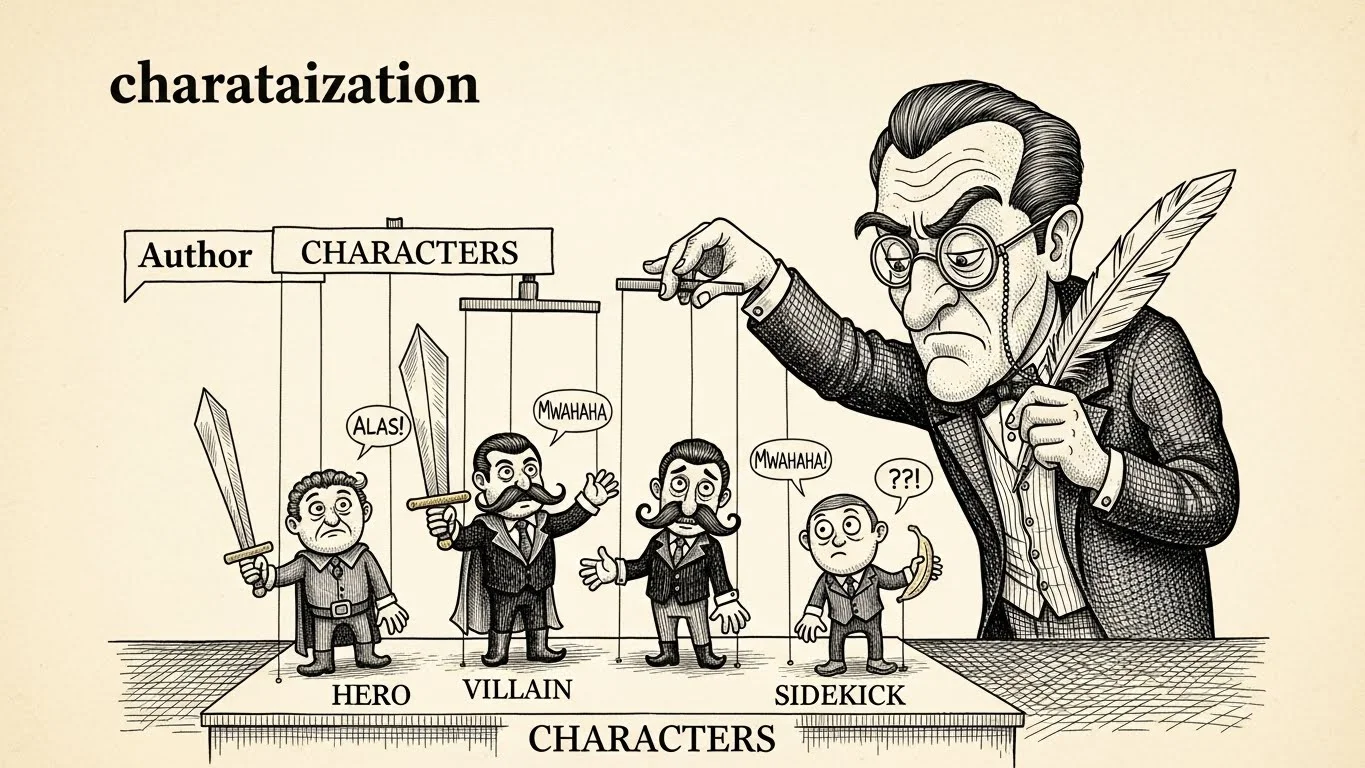
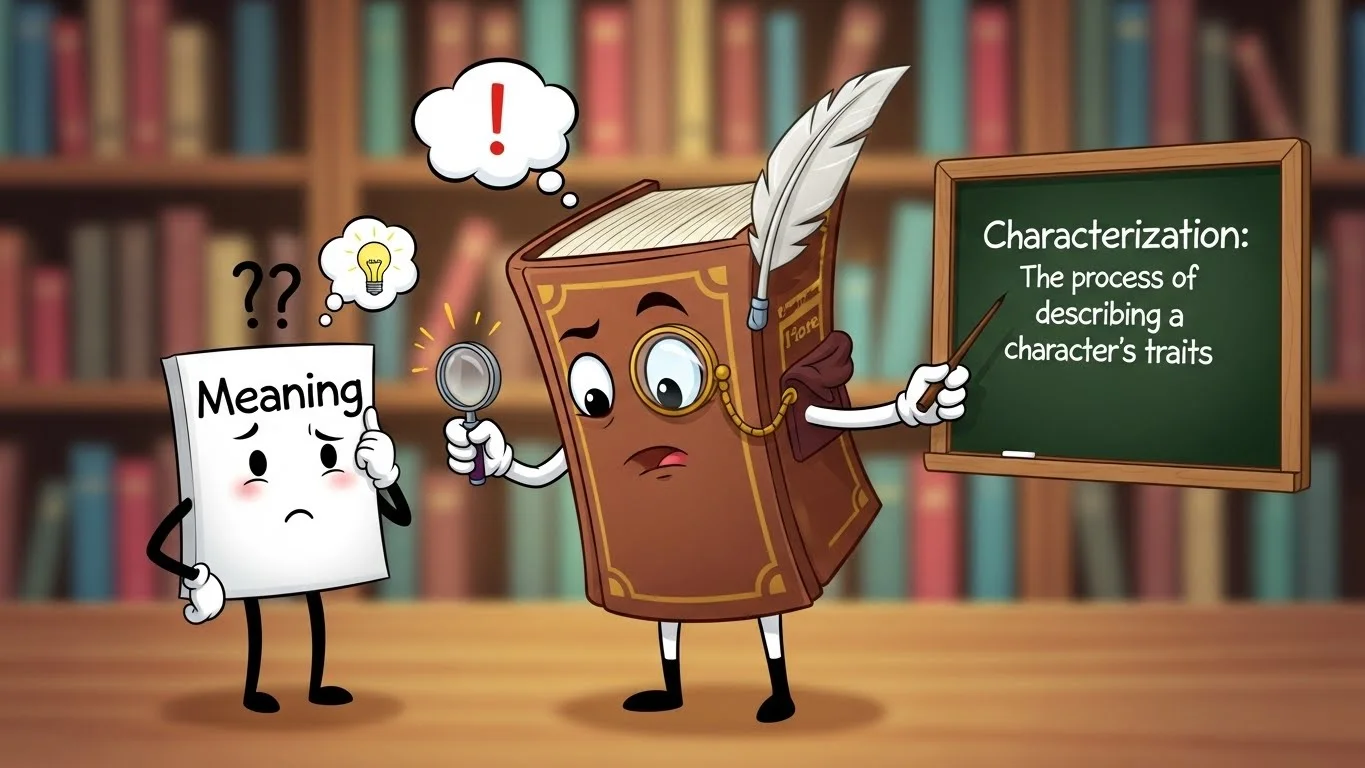
Characterization is the process of describing and developing a character in a story, film, or other narrative.
It includes:
Personality traits
Physical appearance
Emotions and thoughts
Actions and speech
Relationships with other characters
In simple words:
Characterization = how an author or creator shows what a character is like.
Characterization Meaning in Simple Terms
Think of it as bringing a character to life.
Example:
“The author used dialogue and actions to create realistic characterization for the hero.”
This means the writer showed the hero’s personality through what they say and do.
Origin of the Word Characterization
Comes from character, which has Greek origins: kharaktēr meaning a mark or distinctive quality.
Originally referred to distinctive traits of a person, later applied to literary or dramatic creation.
Types of Characterization
1. Direct Characterization
The author directly tells the reader about the character.
Example: “John was a kind and generous man.”
Easy to identify, but sometimes less engaging.
2. Indirect Characterization
The author shows the character through actions, dialogue, thoughts, or appearance.
Readers infer traits.
Example: “John gave his sandwich to the hungry dog.”
→ Shows John is kind without explicitly saying it.
Methods of Characterization
Indirect characterization can happen through:
Speech – What the character says
Thoughts – Internal feelings or ideas
Effects on Others – How other characters react
Actions – Behavior and choices
Looks / Appearance – Clothing, expressions, gestures
A simple acronym often used in schools: STEAL
S – Speech
T – Thoughts
E – Effects on others
A – Actions
L – Looks
Characterization in Films and Media
Characterization isn’t limited to books:
Movies: Through dialogue, acting, and expressions
TV shows: Through recurring behavior and relationships
Games: Through design, backstory, and choices
Example:
In a movie, a character who hesitates to lie shows honesty and moral depth—this is indirect characterization.
Importance of Characterization
Characterization matters because it:
Makes characters realistic and relatable
Helps readers connect emotionally
Drives the story through decisions and interactions
Shows growth and change over time
Without characterization, characters feel flat or uninteresting.
Real-Life Examples of Characterization
Even in daily life, we see characterization:
Observing a friend’s kindness through actions → indirect characterization
Describing someone as “funny and creative” → direct characterization
In storytelling:
“Sherlock Holmes is brilliant, observant, and eccentric.”
“Harry Potter’s courage is shown by standing up to bullies.”
Common Misunderstandings About Characterization
Characterization is just physical description
False. It includes personality, thoughts, and behavior.Only authors create characterization
False. Filmmakers, game designers, and storytellers also use it.Direct characterization is always better
Not always. Indirect characterization often feels more natural and engaging.
Tips for Effective Characterization (For Writers)
Show, don’t just tell
Use dialogue to reveal personality
Include consistent traits and behaviors
Let characters grow and change
Observe real people for inspiration
Related Words & Concepts
Protagonist – Main character
Antagonist – Opposing character
Foil – Character who contrasts another
Round character – Well-developed
Flat character – Simple, one-dimensional
These terms help analyze or create rich narratives.