
What Does “Preemptive” Mean?
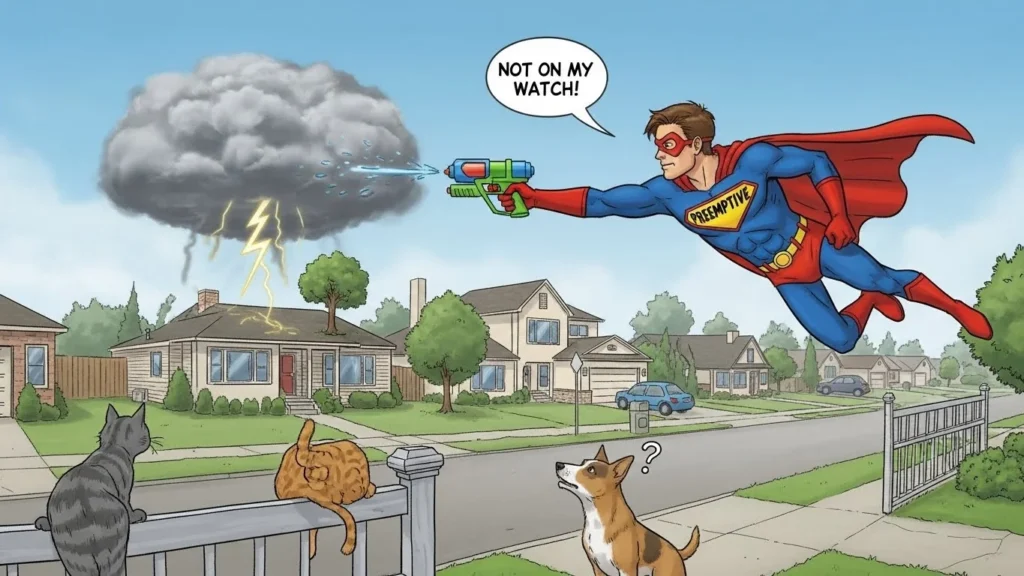
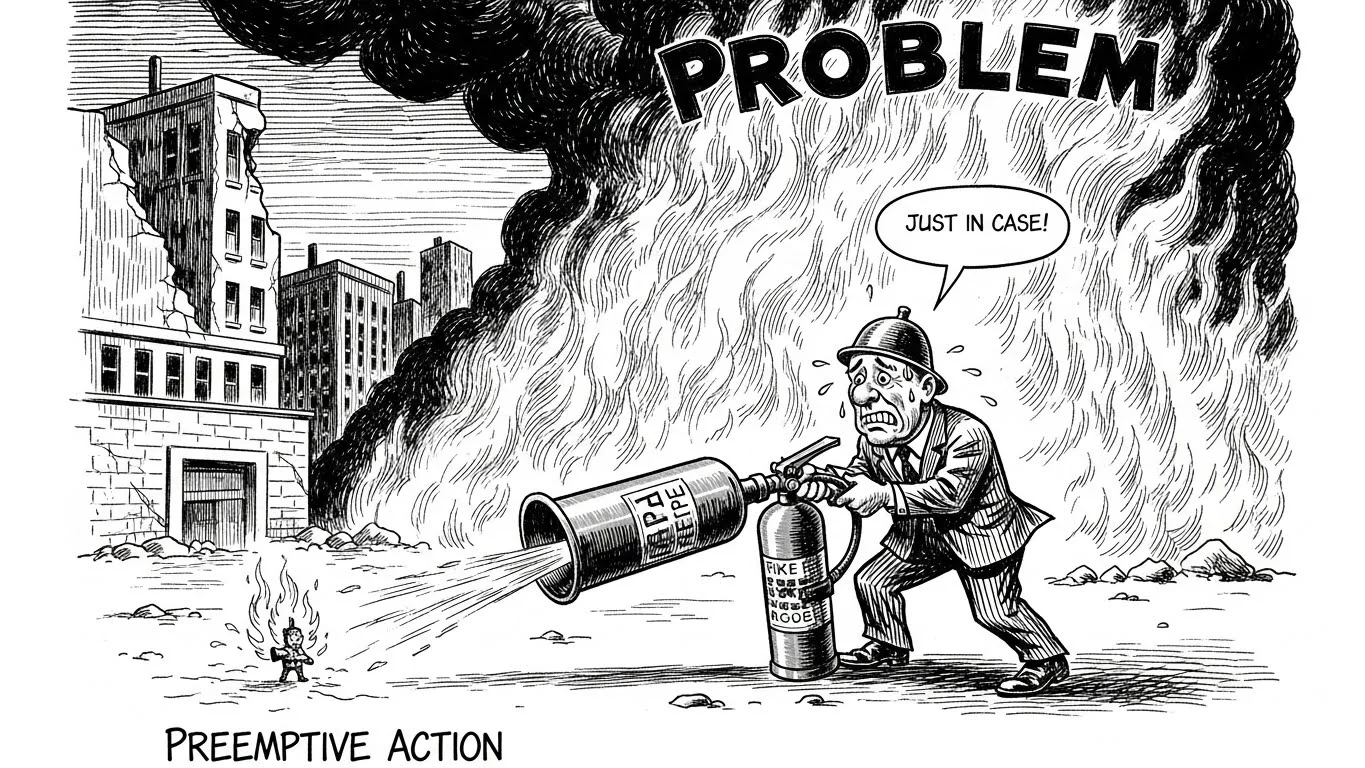
Preemptive describes an action taken to prevent or address a problem before it happens.
Key ideas:
Acting before a potential issue arises
Being proactive rather than reactive
Often involves anticipation and strategy
In simple words:
Preemptive = doing something in advance to stop a problem or gain an advantage.
Preemptive Meaning in Simple Terms
Preemptive comes from the verb preempt, meaning to take action first.
Example: “They launched a preemptive strike to stop the attack.”
This means they acted first to prevent a threat.
Origin of the Word Preemptive
Derived from the Latin word praemittere: prae (before) + mittere (to send).
Originally meant to act before someone else.
Over time, it became associated with preventive or anticipatory actions in English.
Different Meanings of Preemptive
1. Preemptive in Defense or Military
Most common usage historically.
Example:
“The army took preemptive measures against the invasion.”
Meaning:
Action taken before an attack to reduce risk.
Often controversial, as it implies striking first.
2. Preemptive in Business or Strategy
Used in corporate, politics, or personal planning.
Example:
“They made a preemptive announcement to control public perception.”
Meaning:
Acting early to avoid negative outcomes or gain advantage.
3. Preemptive in Everyday Life
Even in daily conversations:
“I sent a preemptive apology in case I offended anyone.”
“She took preemptive notes to avoid confusion in the meeting.”
Meaning:
Preventive actions to stop problems before they happen.

How People Use “Preemptive” in Modern Language (2026)
Politics & News: Preemptive strategies or strikes
Business: Preemptive measures, announcements, or launches
Technology: Preemptive updates or patches
Everyday Life: Preemptive apologies, questions, or planning
It conveys foresight and anticipation, often to avoid risk or gain control.
Real-Life Examples of Preemptive
Military: “A preemptive strike prevented further escalation.”
Business: “The company issued a preemptive recall for safety.”
Personal Life: “She gave a preemptive warning about the traffic delay.”
Social Media: “He made a preemptive post to clarify the rumors.”
Each example shows acting first to prevent a problem.
Preemptive vs Proactive vs Preventive
Preemptive: Acting first to prevent an expected problem (often urgent).
Proactive: Taking initiative in advance (general readiness).
Preventive: Avoiding problems before they occur (focused on safety or health).
Example:
Preemptive: Sending a warning before an argument escalates
Proactive: Planning a project ahead
Preventive: Exercising to avoid illness
Common Misunderstandings About Preemptive
Preemptive = aggressive or hostile
Not always; it can be neutral or cautious.Preemptive actions are selfish
Not necessarily; often protective or responsible.Preemptive is the same as preventive
Similar, but preemptive implies acting first against an expected challenge, while preventive focuses on avoiding it entirely.You can only use preemptive in military contexts
False; it works in business, technology, personal life, and daily conversation.

Why Preemptive Matters in 2026
In today’s fast-paced world:
Acting early is crucial in tech, business, and social media
Preemptive thinking reduces risks, misunderstandings, and errors
It signals foresight, responsibility, and strategic thinking
Related Words and Concepts
Anticipatory – Acting in expectation
Proactive – Initiating action before problems
Preventive – Avoiding potential issues
Forethought – Planning ahead
Precautionary – Safety-oriented measures
These can help expand understanding of preemptive situations.